
Before the 1979 Iranian Revolution, Iran’s legal system was a secular-leaning, hybrid model that merged European civil law with Sharia principles that were heavily modernised under the Shah. This meant that criminal law and procedures were secularised, and traditional religious punishments were abolished.
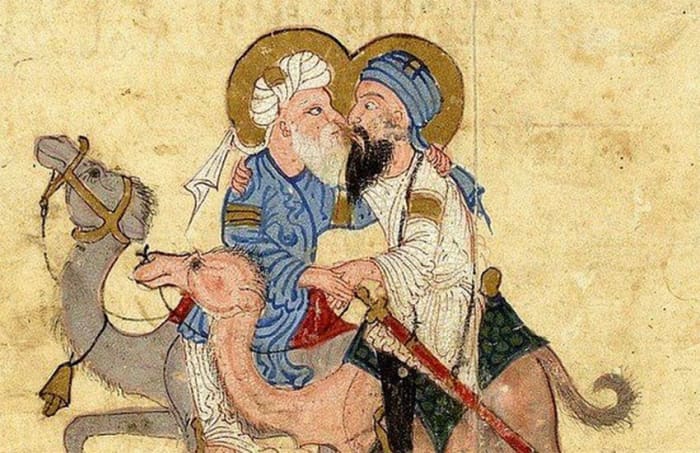
Owing to this liberalism, a tolerated presence of homoeroticism in art, literature, and social life became visible, to such an extent that more ghazals (love poems) and texts portrayed love between males than between males and females. What’s more, Iran’s capital, Tehran, became known in the American press for its robust gay culture, and was considered to be one of the friendlier places when it came to non-conforming sexual and gender expressions.
The revolution, however, overturned any ounce of liberalism in Iran.
Under the new strict interpretation of Sharia law, homosexual relations that occur between consenting adults in private are a crime and carry a maximum punishment of death. This has seen upwards of 7000 homosexuals being hanged, shot, stoned, or burnt to death.
But… why?
Iran’s severe stance on homosexuality is rooted in the ruling regime’s ideological commitment to opposing Western influence, whereby homosexuality is ‘an import from the West designed to corrupt Iranian and Islamic values’, or so people believe…
It is such views that explain why, when asked by a journalist if it was right to shoot homosexuals, the former supreme leader of Iran, Ayatollah Ruhollah Khomeini, responded:
Corruption, corruption. We have to eliminate corruption.
The corruption? Non-normative sexuality. According to the state, it threatens the social fabric of the Islamic Republic.
In Iran, we don’t have homosexuals. In Iran, we don’t have this phenomenon. I don’t know who has told you we have it, President Ahmadinejad infamously told a crowd at Columbia University.
Interestingly, however, it was actually the West that transformed Iran from being accepting of homosexuality to viewing it as an abomination…
The rise of Western values
In the 19th century, much like many other areas of the world, Western views began to seep into Iranian culture, acting as a catalyst in a move towards a very unforgiving and hostile environment for the queer community.
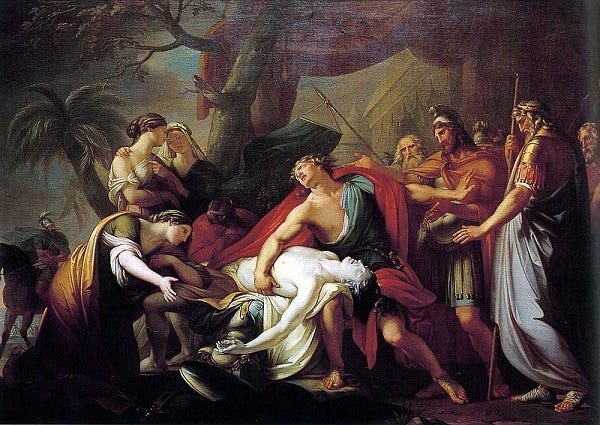
British and French colonial powers imported Victorian morality, heteronormativity, and anti-sodomy laws to countries such as Iran, Turkey, and Egypt. Under their influence, homoerotic traditions in Persian literature were stigmatised, and famous same-sex relationships, such as that of Sultan Mahmoud Ghaznavi and his lover, Malik Ayaz, were ‘whitewashed’ to create the illusion that male lovers were just “good friends.” This is frustratingly similar to what has happened to much of pre-Christian Western literature, such as changing the nature of Achilles and Patroclous’ relationship.
Over the next 100 years, the seed planted by the West slowly grew, until it exploded in the form of the 1979 Revolution. This was the moment Iran became an Islamic state.
The rise of Islamic fundamentalism in the 80’s coincided with that of the gay-rights movement in America and Europe. Therefore, while Western culture began a slow shift towards acceptance following this, the Middle East began to reject Western culture and manipulate anti-LGBTQ+ feelings for their personal gain. From this moment onward, all sexual relations outside of ‘traditional heterosexual marriage’ became illegal.
The only way someone could be gay and stay alive in Iran was, and largely still is, by having gender reassignment surgery. In other words, a lesbian must become a straight ‘man’, and a gay man must become a straight ‘woman.’
One doctor from an Iranian hospital told the BBC that he alone carries out more than 200 such operations every year.
The contradiction is stark.
When people talk about the West being a threat to the social fabric of Iran, they’re forgetting, or perhaps not realising, that the West imposed many of the views Iran now holds toward homosexuality.
In many ways, Iran was actually more liberal than much of the West for a long time.
Alas, as is stated in the book, Foucault and the Iranian Revolution: Gender and the Seductions of Islam (Janet Afary & Kevin Anderson, 2005), the current regime in the Islamic Republic of Iran is suppressing a long-standing tradition of homosexual culture that dates back over a thousand years.
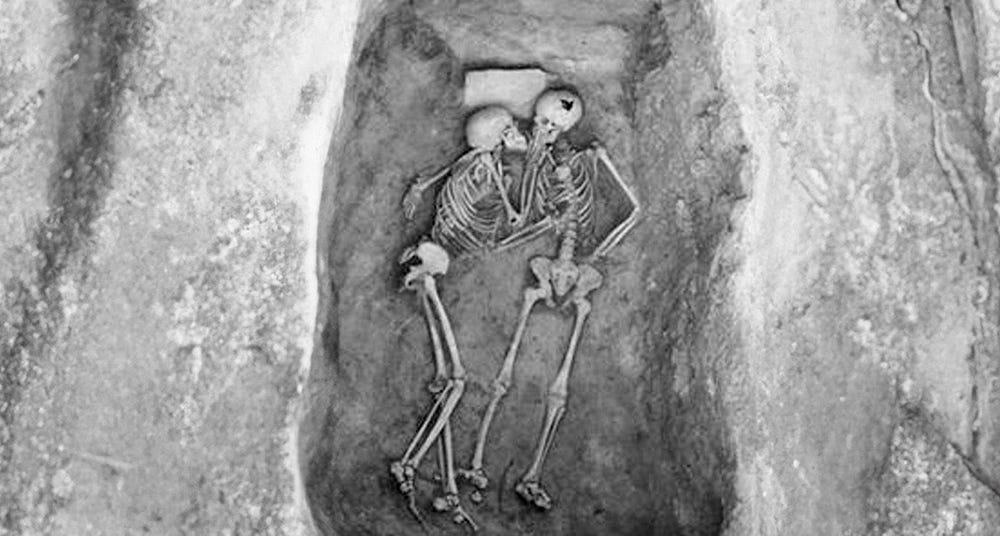
Just consider the Hasanlu Lovers (pictured above). Found in Teppe Hasanlu, West Azerbaijan Province, Iran, and dating to approximately 800 BCE, the intertwined skeletons were found with one skeletal hand touching the other’s face, seemingly embracing at the time of death, and remaining that way for 2800 years until they were discovered in 1972.
Initially thought to be male and female, recent analysis suggests both individuals may be male, proving what we have always known to be true…
QUEERNESS HAS ALWAYS EXISTED.
The influence of the West doesn’t threaten the social fabric of Iran; it upholds it.
 ANARKISS