
For centuries, people have been sold the lie that to live is to work. It’s why, when meeting someone for the first time, one of the first questions we ask is, ‘So, what do you do?’
Our jobs have become our identities.
It’s tempting to believe that this obsession with work is modern — a product of capitalism and right-wing politics — but in truth, it’s a mindset that’s been with us since the Middle Ages.
Just look at our surnames for proof.
From Names to Chains
When surnames became common in 12th-century Europe, people were often identified by their trade. A blacksmith named John became John Smith. A man who milled grain was Miller. Barker meant shepherd, Carter a deliveryman, Chandler a candlemaker, Cooper a barrel maker, Fisher a fisherman.
Our very names became our jobs.
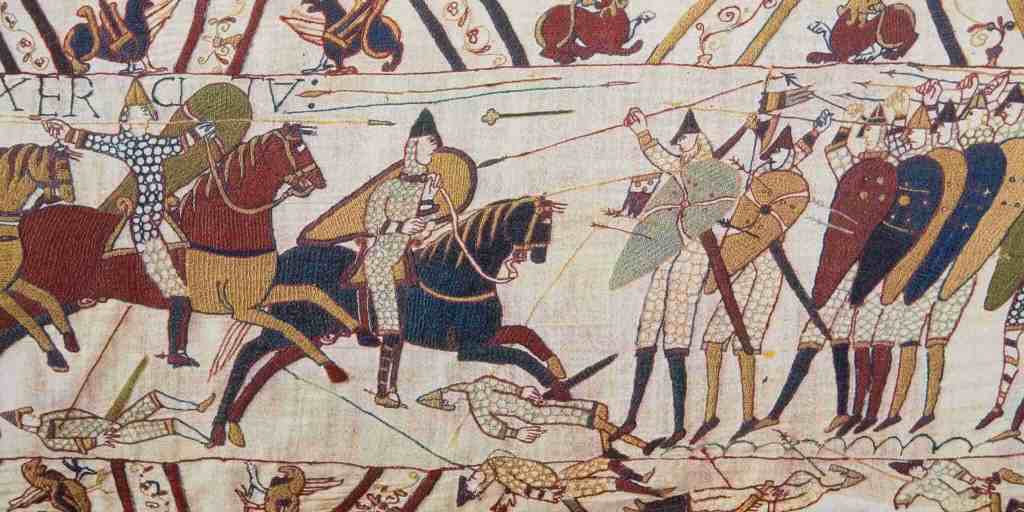
This wasn’t a coincidence — it was by design. The rise of surnames followed the Norman Conquest, part of a broader system that bound ordinary people to their labour and reinforced social hierarchies.
Power, Land, and Control
The Norman Conquest wasn’t just a battle — it was a complete social reordering. The Anglo-Saxon aristocracy was wiped out, their lands seized and handed to Norman lords. From this power grab, feudalism took root: a system in which land was exchanged for personal service.
Most of the population became landless peasants — serfs — obliged to work for their lords in exchange for “protection.” Bound to the land, they were little more than property.
And, once again, surnames reinforced this system. If your name was Smith, you were a blacksmith — and you’d likely stay one. Mobility was near impossible.
To document and control this structure, William the Conqueror commissioned the Domesday Book, a vast record of who owned what. Ostensibly a survey of wealth, it was, in reality, a tool of surveillance and taxation — an early example of government using information to consolidate power.
The names in it tell their own story: those recorded were landowners, not labourers. The working class — those who built the kingdom — were invisible.
The Norman Legacy Lives On
Fast forward nearly a thousand years, and little has changed. Today, around 70% of land in England is owned by just 10% of people, many of whom are descendants of those same Norman families.
Take the Grosvenor family, led by the Duke of Westminster, for example. The duke descended from William the Conqueror’s master huntsman, Hugh le Grand Veneur. Asked about his success, the late Duke once remarked that it “helped to arrive with William the Conqueror.”
Indeed.
The Conquest didn’t just reshape class — it entrenched patriarchy too. Women who inherited land could only keep it if they married a Norman. Those who didn’t lost everything.

Nearly a millennium later, echoes of that system persist. Women still face inequality, workers are still undervalued, and society continues to function as if people exist merely to fund someone else’s dream.
It’s 2025, but we’re still working the land for those who own it.
The Industrial Age: Old Hierarchies, New Names
Workers’ rights took centuries to develop. The first union — the General Union of Trades — wasn’t founded until 1818. Yet even as unions rose, the cultural script remained the same: work hard, stay in line, and don’t question the system.
It wasn’t until 1926 that the nine-to-five work schedule that so many of us live by today came into public consciousness. It wasn’t born from compassion, however, but rather, control.
In 1926, Henry Ford introduced a 40-hour, five-day workweek — seemingly progressive, but deeply self-serving. Ford’s capitalist ideals aligned disturbingly close to fascism. As Hitler himself said, Ford was “the leader of US Fascism.” His model disguised exploitation as benevolence — and we still live under it.
Money: The Modern Feudal System
Even when companies like Kellogg experimented with shorter hours in the 1930s, workers eventually chose longer days for more pay. Time — the most valuable thing we have — was traded for money, a man-made construct that continues to rule us.
We aren’t in Norman England anymore, but we’re still serfs — only now our lords wear suits.
Money has become what land once was: the ultimate instrument of control. Where medieval peasants were tied to soil, modern workers are tied to wages. Those without money starve, while the elite accumulate wealth they could never spend.
The exchange system that once sustained communities has been hijacked to sustain hierarchies. Through money, states maintain order, extract taxes, and reinforce class divisions.
Money (noun): ‘The most disastrous failed experiment in the history of the world by far. ‘Love me, and only me’, it silently screams.‘
Is There Another Way?
In the Stone Age, people lived through exchange, not exploitation. Depending on their occupation, a tribe could exchange livestock, fish, wild game, and later, with agriculture developing, grain. They bartered what they had, ensuring that everyone could afford what they needed. No one was homeless. No one starved.
If people didn’t have a cow to pay for something back then, they could exchange what they did have — shells or beads were common — to buy it instead. If people don’t have money to pay for something today, however, then they simply won’t buy it. This is why millions of people around the world are at risk of famine, and hundreds of millions are on the streets, homeless, all the while the top 1% are living it up in their mansions.

If we stripped away profit-driven production and built societies that prioritised need over greed, we could create communities based on contribution and compassion — not competition.
People already create and give out of love every day — artists, volunteers, caregivers. Imagine if that were the norm, not the exception.
Despite common arguments that greed is human nature, ‘we are animals, and there will always be a ruler’, there is a stark difference between us and the rest of the animal kingdom. Unlike every other species on Earth, humans have an advanced capacity for complex moral reasoning.
‘The Lord of the Flies begs to differ,’ I’ve heard people use as a counterargument. ‘Without a hierarchy, the world would descend into savagery’, they continue, all the while forgetting that The Lord of the Flies is FICTION. There is no truth to it.
The fact is that while humans have the capacity for evil, they also have a capacity for good, as real-life examples prove.
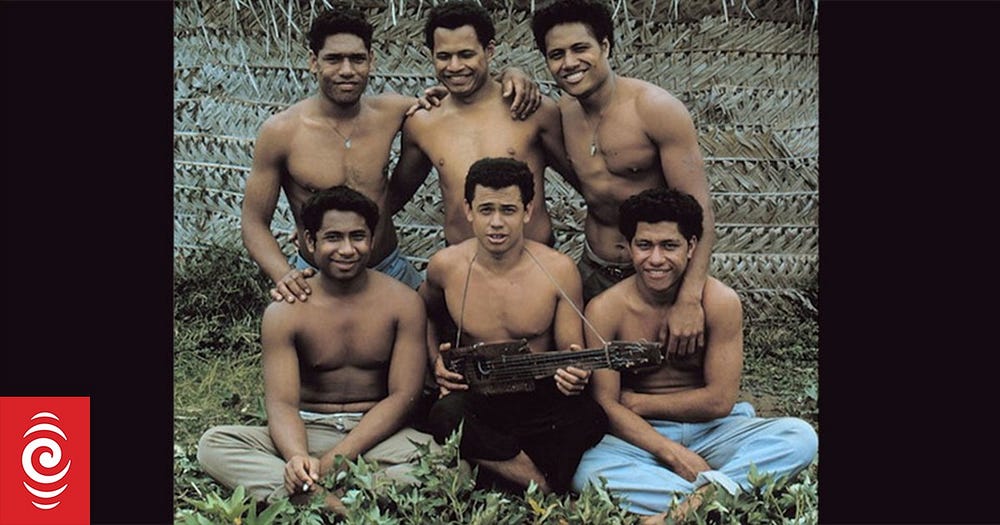
Unlike The Lord of the Flies, which is a fictional novel, The Tonga castaways’ story is a real story about six teenage boys (pictured above) who ran away from boarding school in 1965, stole a boat, and were shipwrecked on the uninhabited island of ʻAta. They survived for 15 months by forming a cooperative community, building a shelter, and maintaining a sustainable food source, all before being discovered and rescued by Australian fisherman Peter Warner in September 1966. Their story is often contrasted with Lord of the Flies because, unlike the fictional account, they worked together rather than descending into chaos, proving that cooperation, rather than savagery, can be the dominant response when societies collapse. How so? Because we are not animals bound by instinct, we are human beings capable of moral choice. We therefore do not need to act on impulse to make selfish decisions that benefit only ourselves.
Our greed is not innate — it’s learned. And just as it was learned, it can be unlearned.
If we could only let go of our fear and selfishness and simply — give — this world could be beautiful again.

 ANARKISS