
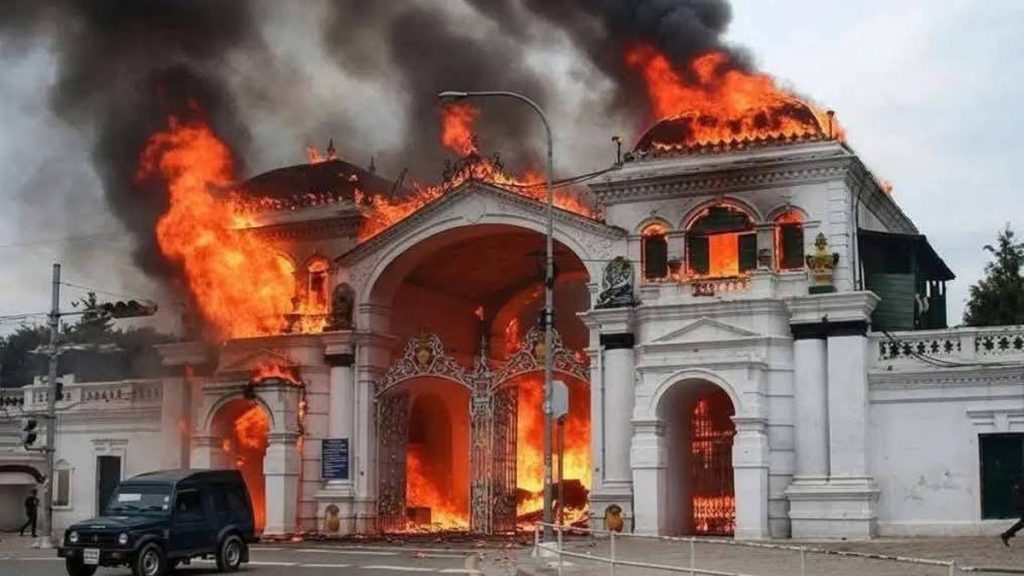
Triggered by the government’s decision to ban 26 social media platforms, including many of the giants, such as WhatsApp, Instagram, and Facebook, young people in Nepal have had enough.
They have had enough of an attack on free speech being disguised as a mission to tackle ‘fake news.’
They have had enough of being treated like second-class citizens, while the 1% (and their children) get to live the high life.
They have just…had…enough.
And, what happens when someone has had enough of something?
As the history books show us, they fight back…
We will launch another revolution, but it will not be like the last People’s War, a PLA soldier told the media.
And that they did.
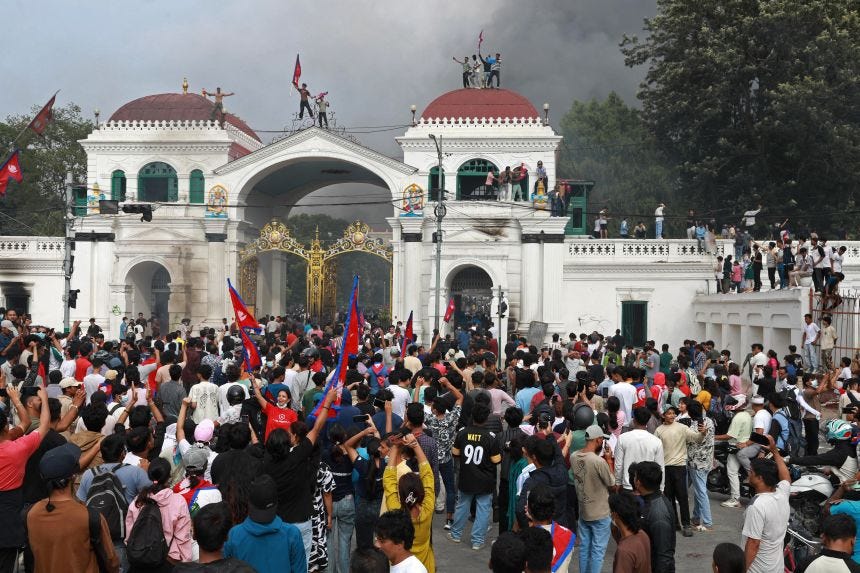
What began, seemingly as retaliation against the social media ban, has grown to embody much deeper discontent with Nepal’s political system as a whole. This is why, despite the ban being hastily lifted, the protests continued to gain unstoppable momentum.
Nepal has been plunged into chaos, with this being the prime example of what happens when power corrupts…
The people fight back.
Along with government ministries and residences, dozens of other properties have been set on fire by protestors, including a luxury hotel and a prestigious private school.
The prime minister has stepped down due to all the conflict, during which politicians’ homes were vandalised, and government buildings and parliament were torched.
Sujan Dahal, a young Nepali celebrating the prime minister’s downfall, said of the protests, “This is a revolution. This is the end of the corruption. It’s our turn now.”
We demand a transparent and stable government that works in the interest of the people and not for the benefit of corrupt individuals or political elites.
Some of the potential demands that the protestors could make include the dissolution of parliament, new elections within six months — or, at most, a year — and possibly, a mechanism to directly elect the prime minister (like other parliamentary systems, at present, it is the party that comes to power that chooses the prime minister).
Term limits for prime ministers, and a reduced term for parliament — from five years to four — might also figure in their demands.
Lokranjan Parajauli, a social scientist who has written extensively on social movements and politics, suggested the next ruler is likely to be an “independent” figure not aligned with any party.
Ultimately, as long as the country’s leaders listen to what they have to say and take their demands seriously, they will have no need to fight anymore.
Alas, the protests have not, however, been without fighting.
Although the prime minister has resigned, and most senior politicians are in hiding, the protestors have not been left to ‘get on with things’ without challenge.
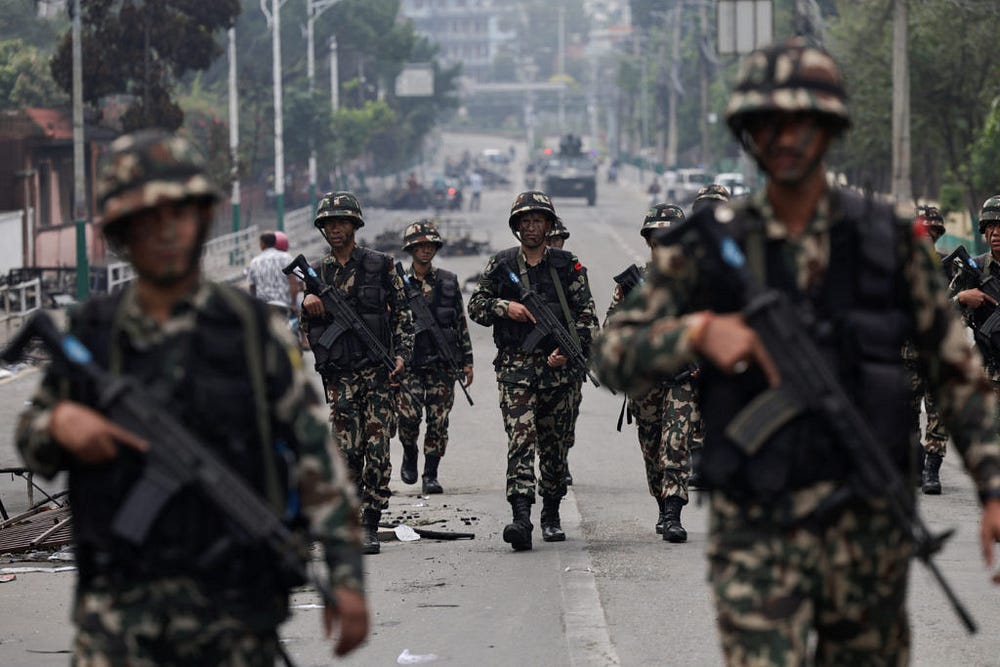
Over 50 people have been killed and dozens more have been injured during demonstrations as the army patrols the streets.
Although such unrest, to the world, might seem like it has come from nowhere, it does, in fact, sit within a long history of fragile democracy.
The Last People’s War
Over three decades ago, in the year 1994, a new party was founded in Nepal; the CPN (Maoist Centre). This was a result of one party, the CPN (Unity Centre), splitting into two.
Just two years after the Maoists formed a collective, they launched an armed struggle against the Nepalese government and its state forces. A civil war broke out as a result.
For many, the civil war — referred to as the People’s War by the Maoists — was a fight against discrimination and oppressive social hierarchies — whether based on caste, gender, wealth, ethnicity, religion, or region.
About a third of the fighters were women. They were drawn to revolutionary politics because they saw in it an opportunity to challenge a patriarchal system that considered them inferior to men.
The war ended after a peace accord was signed in 2006. The purpose of this was to allow the Maoists to join the government, a government that they would go on to rule…
In their first sitting, the Maoists scrapped the 240-year-old Shah monarchy. They had been calling for the monarchy to be abolished since India’s freedom struggle against the British.
The following year, the country was declared a democratic republic.
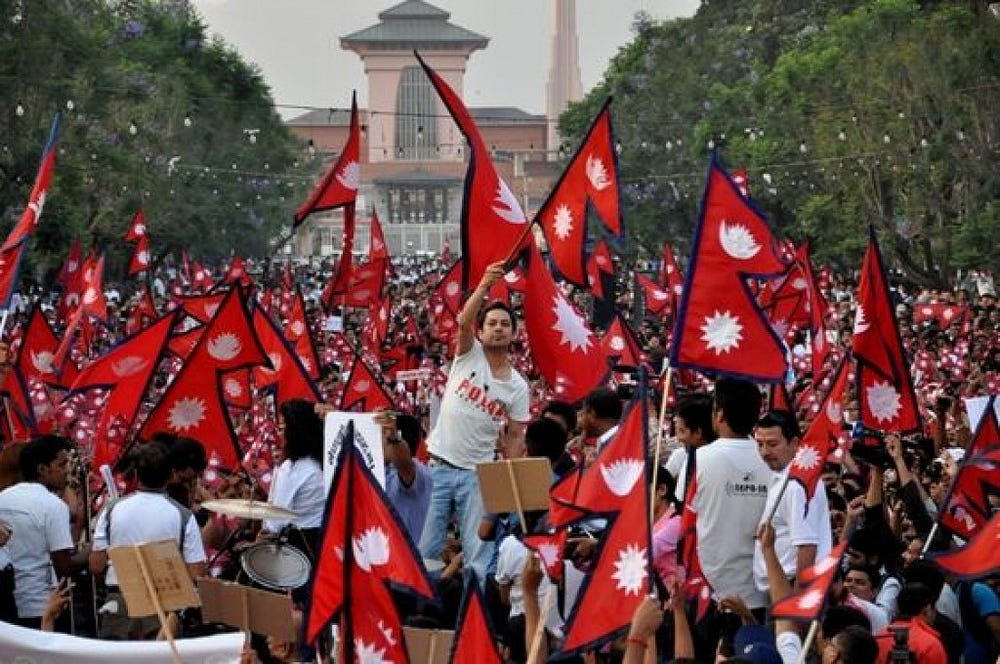
It’s not a coincidence that so few people are aware of Nepal’s history…
Governments don’t want us to see the outcome of people coming together to fight for a common cause, because they worry that it could inspire us to start a revolution of our own.
As the Maoists have proven, we, as the people, don’t have to accept what they, as the leaders, impose, and that should leave us all with a glimmer of hope for a brighter tomorrow.
The world right now is a scary place. There is so much happening that could very quickly escalate into something far greater than we are prepared for. With Russia testing its waters with Poland, and the far-right gaining seemingly ever-growing momentum across much of the Western world, it’s difficult to remain positive in the face of such corruption.
What’s important to remember, however, is that you, we, don’t have to remain as passengers in our lives. We can all decide to swap seats and be the driver(s) instead.
Get your voice or your words or your art, preferably all of the above, out there. If it doesn’t feel like anyone is listening, have faith that people are.
Had someone not decided ‘enough is enough’ in Nepal, there would still be people starving to death while the monarchs host feasts for ministers in their palace (sound familiar? I’ve never stepped foot in Buckingham Palace, but I can picture a similar scene, and it’s a mirror image of the French Revolution) …
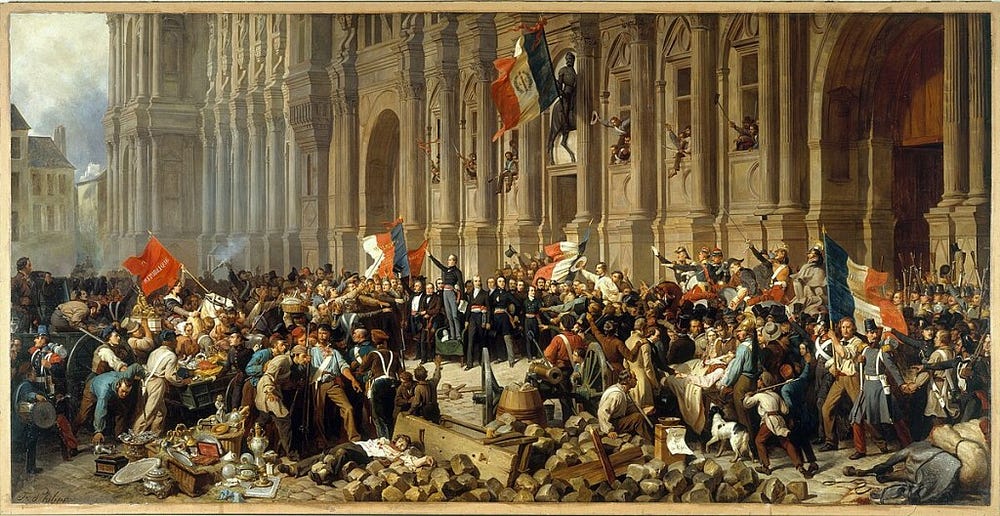
The overarching message is that if you let people get away with things, there will come a point when they push that little bit too far, and before you know it, you’re standing with a placard begging to have your human rights back.
Don’t let it get to that point, please.
A tale as old as time, always remember that prevention is better than cure.
It’s not about ridding the world of governance, as the French Revolution demonstrates; there is a recurring pattern in human societies. When a government collapses, individuals will inevitably seek to seize power. The revolution’s journey from overthrowing a monarchy to the establishment of an empire under Napoleon shows this. It’s about ridding the world of inequality.
We need leaders who seek to lead for the greater good, not control for the sake of having power.
Only when we have this will there be world peace.
Here’s to the abolition of power, not the mere shift of it.
 ANARKISS