

The Western world is seeing a worrying trend when it comes to representation in the media.
Seemingly long gone are the days of the BOPO (body positive) movement, where companies would actually make an effort to be more inclusive.
In the 2010s, for example, Valentina Sampaio became the first openly trans model to walk for Victoria’s Secret, Halima Aden became the first hijab-wearing model in global campaigns, and brands like Savage x Fenty featured plus-size models on the runway.
Since the turn of the decade, however, as the 2010s became the 2020s, we have taken a massive step backwards, having gone from more human to non-human…
Saving costs or losing humanity?
AI is expanding out of the tech industry and into the fashion industry, but why?

Agencies that provide AI models claim that people use AI to save costs. ‘Paying someone to create an AI model is cheaper than employing the real thing.’ The reality, however, isn’t quite so clear-cut. When GUESS, a company that has a net worth of over $700 million US dollars used AI models in its latest Vogue campaign, we realise that the use of AI is, in fact, far more sinister than we are led to believe…
Just think about it. Companies concerned with fashion and/or makeup form their entire business plan around the insecurities that people have, and their promise to provide them with a solution. If everyone were to wake up feeling secure, their business would therefore cease to exist. It is for this reason that we are constantly made to feel as though we are chasing the unattainable.
We’re made to feel as though we’re chasing the unattainable because we are.
We are all chasing that which can never be caught.

Introducing AI to the fashion industry, then, an industry that, as we have established, relies on us chasing the unattainable, well, it was a no-brainer…
Selling unattainable fantasies packaged up as realities.
As seen in Elle, Grazia, Vogue, WSJ, FT, and Harper’s Bazaar, the AI models used in the fashion industry are extremely lacking in diversity. They are predominantly white, thin, twenty-something-year-old women.
Is it, therefore, any wonder that so many people struggle with their self-worth when that which they are told they must strive to achieve is the unachievable?
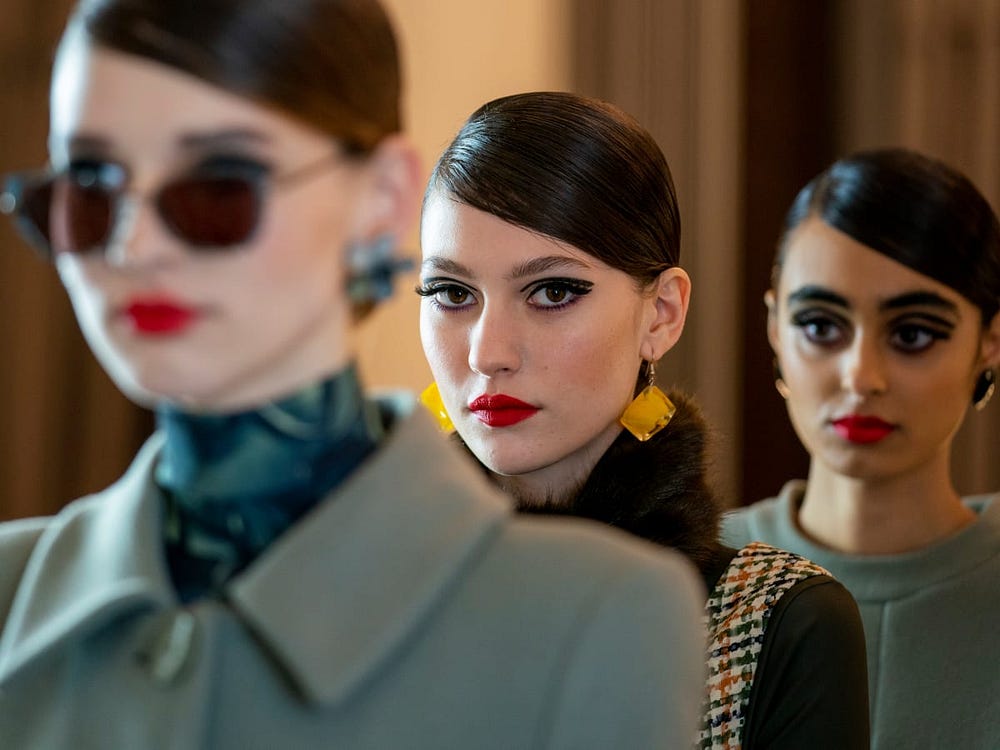
When the founders of Seraphinne Vallora, the agency behind Guess’ AI model, were pressed on the issue surrounding the lack of inclusion of different body types in their campaigns, they explained it away with the excuse that ‘the technology is not advanced enough.’
Bullshit.
If they can make an emaciated model, they can make a healthy one just as easily. Don’t let them excuse away their biases… Don’t let them give away your job(s)…
AI not only poses a threat to consumers but also to service providers.
Seraphinne Vallora lists on its website the benefits of working with them. These benefits centre around its ‘cost efficiency’.
Vallora, the website states, ‘eliminates the need for expensive set-ups, make-up artists, venue rentals, stage setting, photographers, travel expenses, and the hiring of (real) models.’
The question of AI models is therefore not just a question of ‘How will this impact body image?’, but also a question of ‘How will this impact livelihoods?’, hence the backlash surrounding its increasing popularity.
It might be good for profit, but it certainly isn’t good for people.
If there are no human models, all consumption, no creation, then there will similarly be no make-up artists, or photographers, or stylists. Apart from a few people sitting behind a computer, there will be no humans at all.
Where will this leave us?
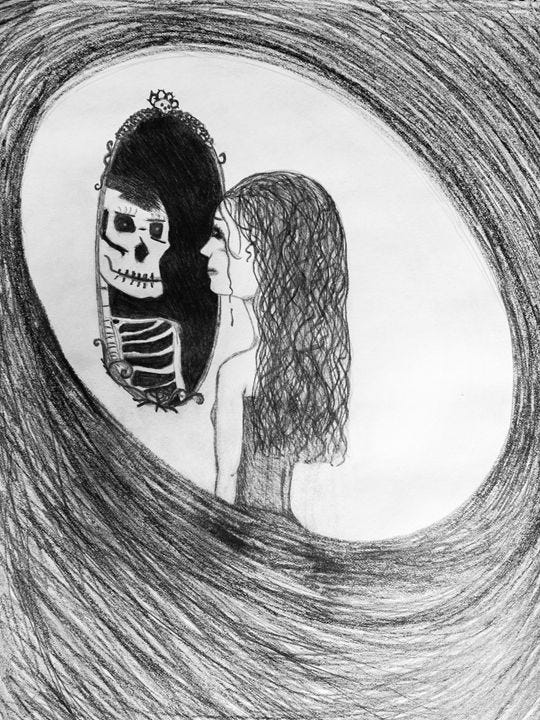
Look in a mirror and you will see yourself reflected; except it’s not actually you, but rather a reflection/something which could never capture the true essence of your being. And the same is true of AI. AI might look human, but no machine could ever hold your light.
Free from human flaws, inconsistencies, and uniqueness, the use of AI in modelling is a war, not only on fashion, but also on art and culture as a whole.
And it is a war that we cannot lose.
 ANARKISS