
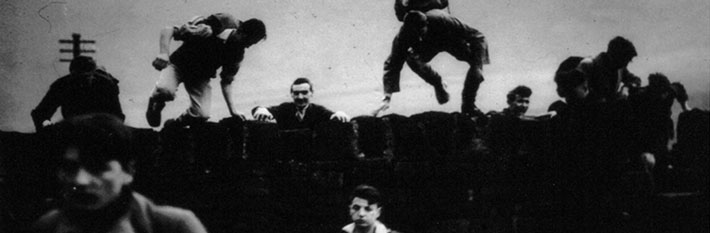
People have been campaigning against the restrictions on our freedom for decades, albeit to varying success.
The first demand for the right to roam was made in parliament in 1884 with the Access to Mountains Bill. It was unsuccessful, but the fight for reform had begun.
Welcome: The Kinder Scout mass trespass.
In the 1930s, Kinder Scout and much of the surrounding moorland was owned by the Duke of Devonshire and was kept for grouse-shooting. Access forbidden. That was until the 24th of April 1932, when around 400 ramblers hiked across the moorland of Kinder Scout in defiance of landowners’ restrictions.
They risked their freedom for our freedom.
The overarching message of the walk, one that was to become a pivotal moment in the history of public access to the countryside in Britain, was this: Lift the limitations on public access to open spaces and give us back our right to roam.
Although five individuals were arrested for ‘breach of the peace’ following the trespass, its overall impact was positive.
Two years after the Kinder Scout mass trespass, the UK’s first national park, the Peak District, was created. And one month after that? The Lake District.
Belinda Scarlett, who manages the Working-Class Movement Library, said the event was ‘one of the most important examples of direct action of the socialist and communist politics of the 1930s.’ Lord Roy Hattersley (2007) went one step further in describing it as ‘the most successful direct action in British history.’
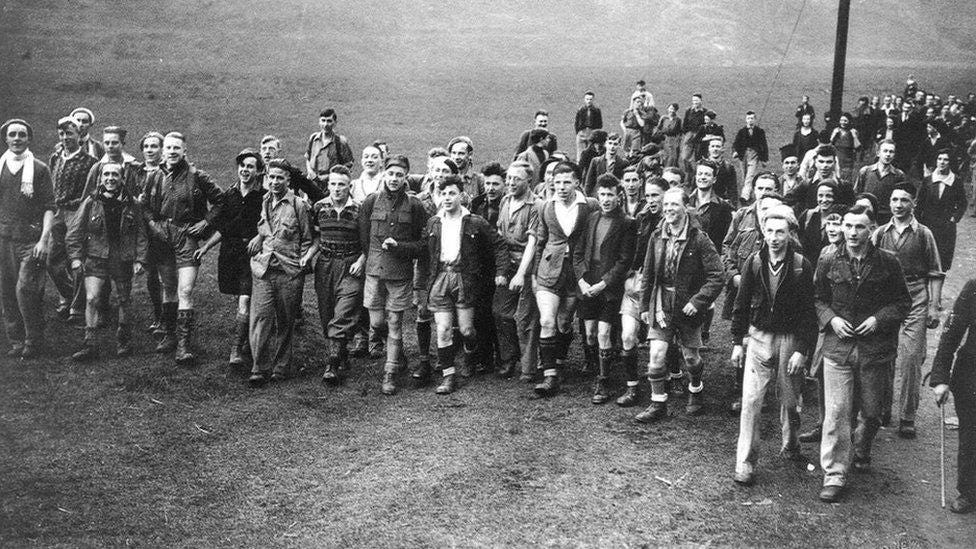
Despite the success that the Kinder Scout mass trespass undoubtedly had (in the years prior to 1932, only 1% of the Peak District was accessible, and there were only seven legal paths running through it), the campaign for greater access to our countryside and the right to roam in our wild places continues.
The “Right to Roam” act that was introduced in England in 2000 grants the public the legal right to walk on designated areas, but when those designated areas account for only 8%* of all land, (92% of the English countryside still remains out of bounds), evidently, it’s not enough.
*What’s more, to make matters even worse, 8% of this so-called ‘designated open access land’ is surrounded by 2,700 hectares of private land. Instead of being a public right of way, it has been privatised, fenced off, and firmly held under the control of a small number of rich landowners.
As it was all about greed then, it’s all about greed now. The only difference? Instead of grouse shooting as it was then, now it’s all unaffordable new build house hunting.
We still have our right to roam restricted to us by greedy landowners who prioritise lining their pockets above all else, hence why up to 70% of ancient woodlands have been destroyed in the process of increasing urbanisation.
Protected land, that being land with a special legal status where building is generally prohibited, has declined to just 2.93% in recent years. It is perhaps therefore unsurprising, given such a statistic, that the UK is amongst some of the most nature-depleted countries in the world.
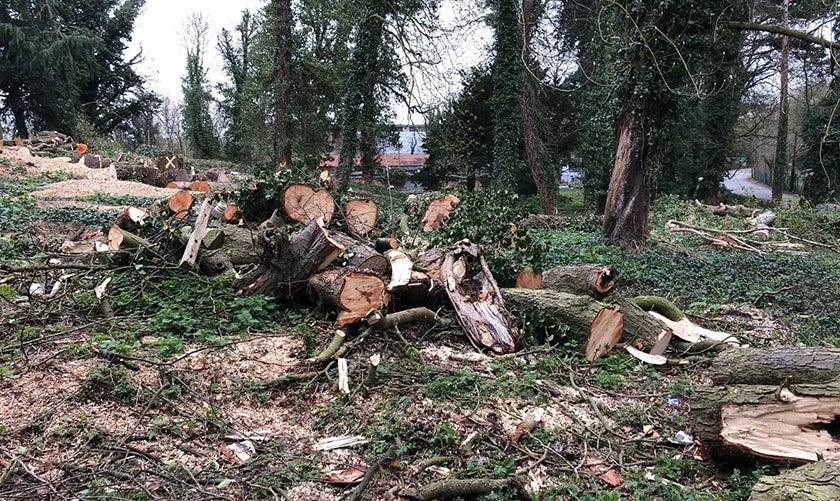
While there’s no disputing the fact that people need houses, there’s also no disputing the fact that we all need nature…
The housing crisis is more a crisis of greed than a crisis of needing houses, because the houses already exist! The problem, therefore, is not related to the UK having too few houses, but too many private landlords and developers who, driven by profit, snatch up existing stock and inflate prices to unaffordable levels.
The few benefitting at the expense of the many, it’s, all too sadly, a recurring theme…
Nothing much has changed since 1932. They called out the rich men for denying them their right to access their home, as we call out the rich men for denying us the right to access ours.
Whether in nature or brick and mortar, we cannot stop campaigning until we are all on the same page…
 ANARKISS