

They were once the epitome of British subculture. The brand to have for punks and skinheads, they were British-made and long-lasting, and everyone wanted to have a pair. Now, however, they are a shell of their former self…
What happened?
Dr. Martens are no longer being produced in the UK. Following a private equity deal in 2013 with the £30 billion group Permira, production for the iconic brand has been taking place abroad. While the UK factory is still running, to have a pair from that store (i.e., to have a pair that won’t fall apart in the first six months- 2% of the current Dr Marten inventory), there’s a price, and it isn’t cheap. For the classic 1460 Quilon leather ankle boot, for example, the price is £220. The price for a ‘normal’ pair (i.e., a pair made in Asia- 98% of the current inventory), however, is just £122.
Just over half the price for well under half the quality…
When Dr Martens were still being made in the UK, they were known for their quality. People could go decades without needing a new pair and, when they finally did need an upgrade, they could benefit from DM’s ‘For Life’ program.
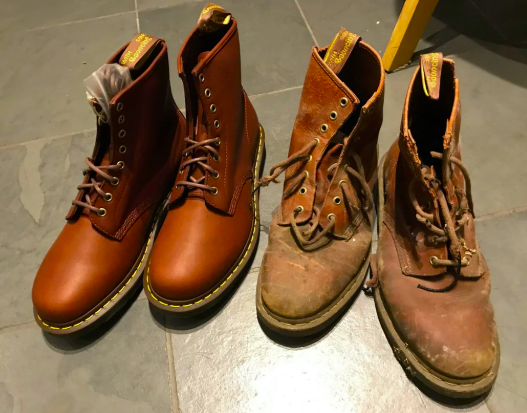
Prior to 2018, all DM boots were sold with a lifetime warranty. The program guaranteed replacement or repair of worn-out shoes for free. Now, however, there is no such thing.
It’s all about profit.
Fast Fashion
No longer ‘counterculture’, Dr Martens is aimed at a mass market now, which is sad. It’s sad that a brand that once represented the working class has now been ‘gentrified’, one could say, by greedy businessmen.
Unfortunately, this is not just a quality issue reserved for Dr. Martens, either. The fact is that what we are seeing, increasing prices and decreasing quality, is affecting just about everything we buy and consume today, across the board…
Shein and Temu, AliExpress and Wish, they all sell Chinese-made products at extremely low prices that UK manufacturers simply cannot compete with. Their business model, one of mass production, where workers labour extensively in order to fulfil demand, therefore, unsurprisingly, has many ethical implications…
You Pay Less, They Pay More.
Working up to fourteen hours a day (standard working hours tend to be from 08:00 to well past 22:00) with only one day off per month in all too many cases, the work in factories for the likes of Shein and Temu is gruelling*.
*(Gruelling, and unquestionably a violation of human rights)…
For however long we keep buying from the likes of Shein and Temu, though, the suffering will continue, as Marco Rubio, a leading Republican on the US Senate Intelligence Committee, and an ally of Donald Trump, echoed…
‘With every purchase made on these platforms, the abuse of human rights is further normalised and reinforced.’
Last year, Rubio wrote to then-UK Chancellor Jeremy Hunt, warning him about “grave ethics concerns” surrounding Shein. “Slave labour, sweat shops, and trade tricks are the dirty secrets behind Shein’s success,” Mr Rubio wrote in his letter to Mr Hunt. Did the UK listen, though? No, of course they didn’t listen because, as always, business is centered on the premise of prioritising profit over people.
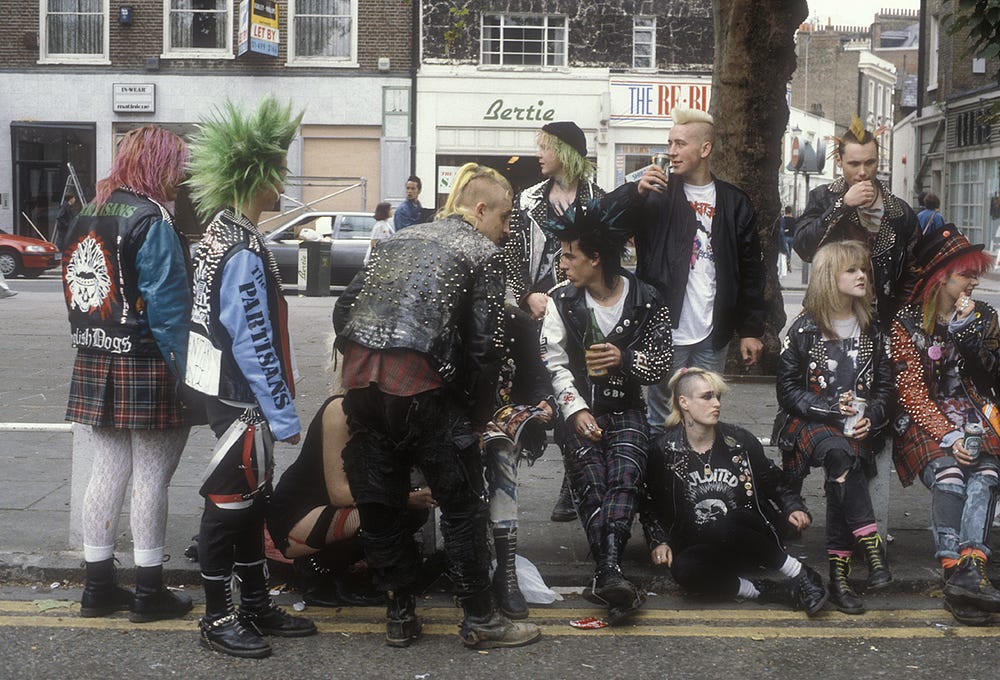
Gone are the subcultures of yesterday, when getting a pair of Docs was a nod to being a part of something bigger than oneself (see the image below). Now we are all buying into the ever-moving, never resting, always manufacturing world of fast fashion.
To end with a more positive sentiment (it’s not all doom and gloom, I promise!), it’s hopeful that there are sites that encourage recycled fashion to at least counteract some of the damage that companies like Shein and Temu are inflicting upon the world. Sites such as Vinted and Depop, for example, exist to encourage people to buy second-hand, as do charity shops. It’s also hopeful that younger demographics are increasingly seeking out vintage clothes over mass-produced garments. We must continue to foster this and encourage it since fast fashion not only hurts individual workers, but also the world. How do you think your Shein haul gets to you from China? (Hint: It’s not via electric car or bicycle) …
The more people who buy and sell second-hand clothes, favouring vintage over new, the more hope we have for humanity.
 ANARKISS