
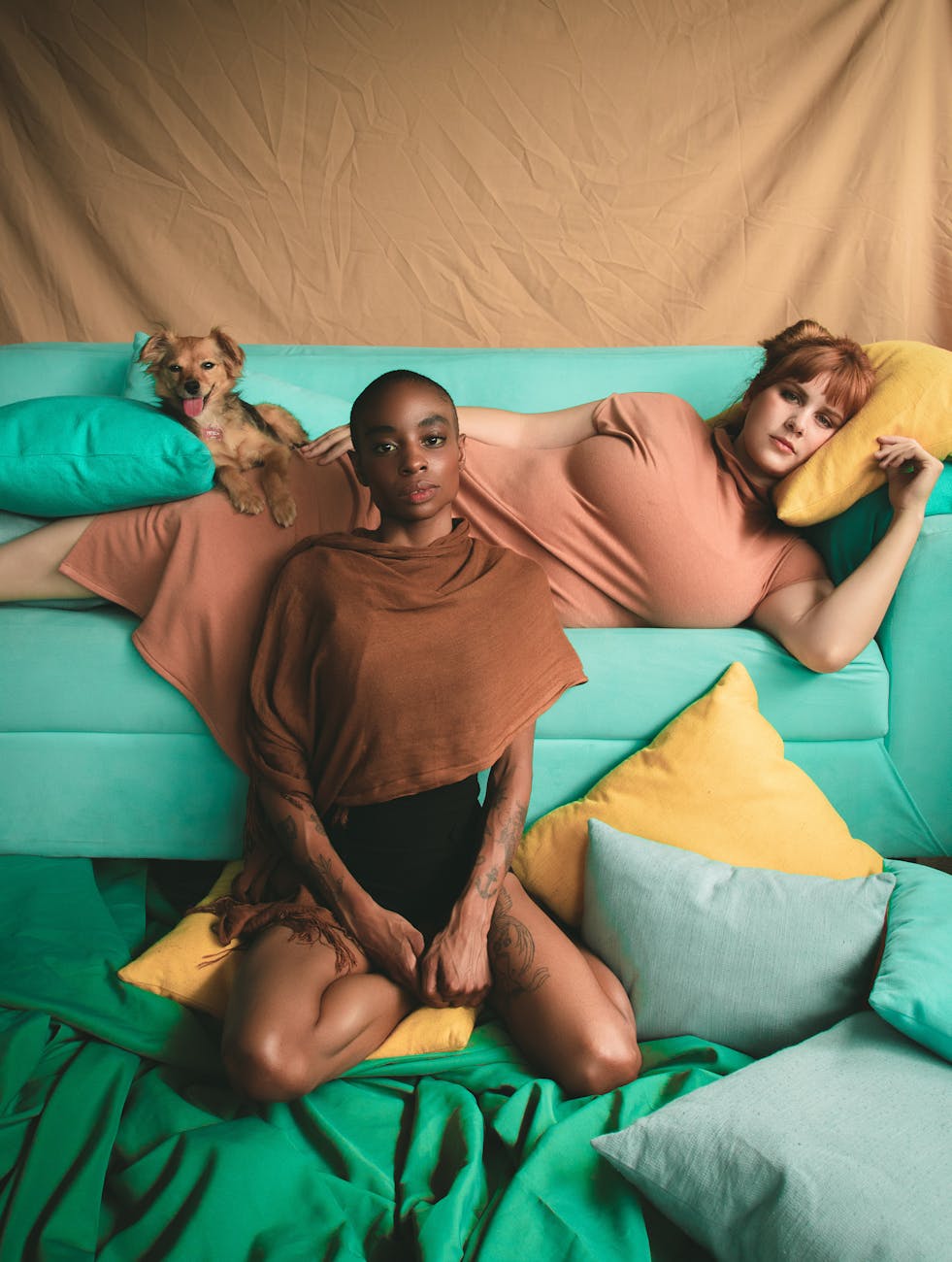
Feminist separatism, sometimes referred to as lesbian separatism/’political lesbianism’, is a branch of feminism, originating in the latter half of the 20th century, that poses the theory that feminist opposition to the patriarchy can only be achieved through women’s separation from men.
This is a controversial theory, however, for several reasons.
Firstly, the implications of suggesting that one can simply ‘choose’ to be lesbian is akin to homophobia.
The ‘political’ lesbian shares the same energy and headspace as the “same-sex attraction is a temptation you can choose to avoid” Christian. It perpetuates the idea that lesbians are choosing to be with women and can easily change their minds (they can’t).
Lesbianism as a ‘political strategy’
‘If it is something that we can choose to be, then surely it is something that we can also choose not to be?…’
Sexuality is not a choice. You cannot conflate something that is a fact (like being a lesbian) with a political choice.
Women who call themselves ‘lesbians’ because they have decided that they want nothing to do with men, and not because they are only sexually attracted to women, trivialise and disrespect our experiences, when sexuality, and the feeling of who we’re attracted to, are not things that we can control.
Another reason why lesbian separatism is controversial is due to the demonisation of men that subscribing to such a radical theory demands.
Lesbian separatism implies that one can simply ‘choose’ to become a lesbian, regardless of the presence of same-sex desire, solely because they perceive men as being ‘unsafe’, having depicted them as the enemy.*
*(As a pamphlet written in 1979 states, feminists who sleep with men are ‘collaborating with the enemy.’)
It’s not men who are the enemy though, it’s the patriarchy.
Alas, lesbian separationists hate men more than they love women…
A bisexual woman forcing herself to only date women, for example, will only lead to self-hate and internalised biphobia, thus causing women to become the collateral of the very thing that they are fighting against- a lack of freedom over their own lives.
A person’s sexuality should not be labelled based on who they hate, but rather, based on who they love.

Why do some feminists hate men so much?
Some feminist separatists believe that men cannot make positive contributions to the feminist movement and that even well-intentioned men replicate the dynamics of the patriarchy.
While it cannot be argued that the patriarchy is real and rife in society, it can (and should) be argued that oppression isn’t just ‘in every man’s nature’, as some radical feminists would have us believe
Masculinity is in every man’s nature, yes, (to varying degrees, granted) but that is not what we are fighting against. We are fighting against toxic masculinity, and its associations that men have been socialised into believing are synonymous with masculinity (but they really aren’t).
If they were, then why would some women proudly state that they are ‘anti-feminist’?
Why would women want to distance themselves from the cause?
I’ll tell you why. Because it’s not just a male-to-female issue, it’s a societal issue.
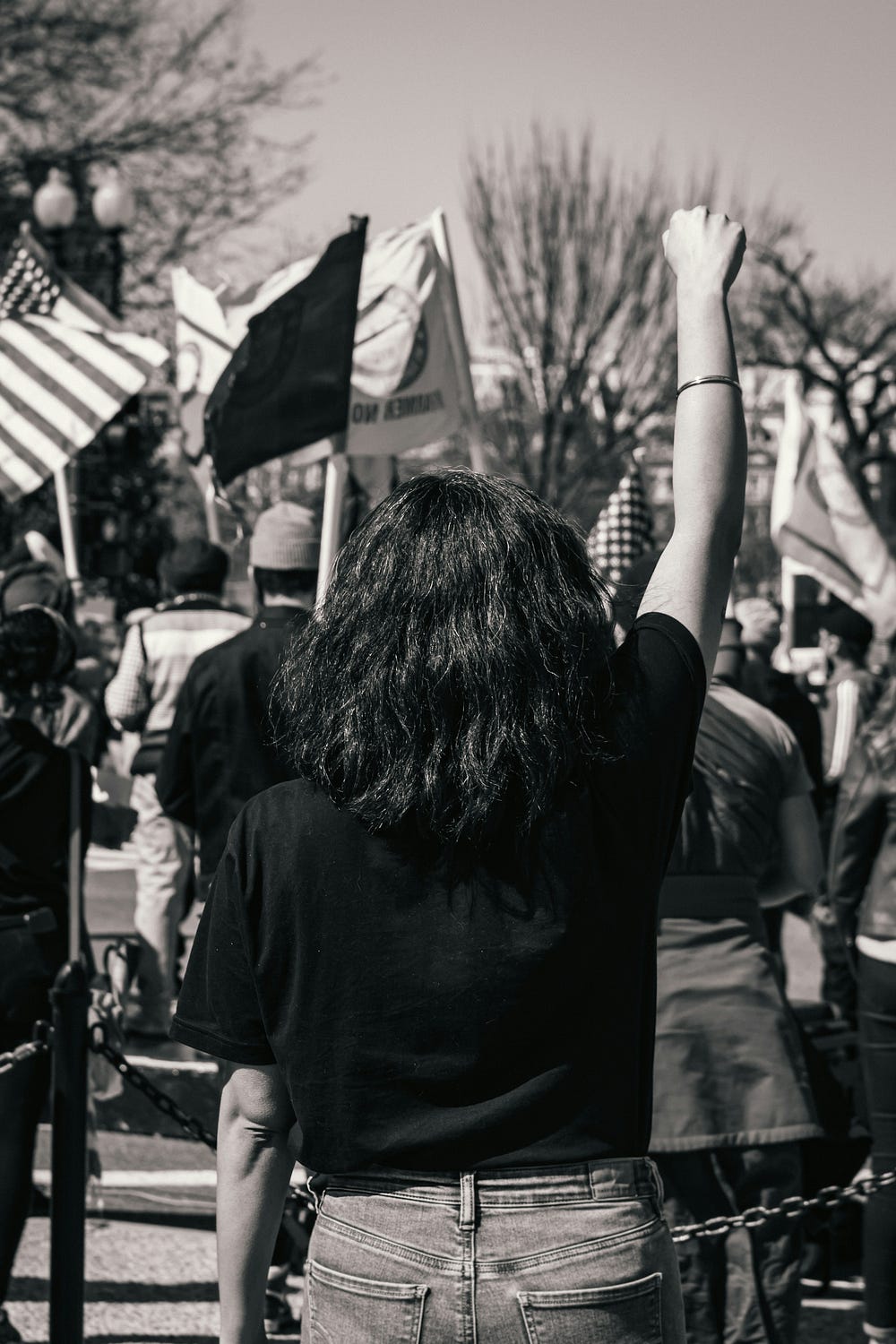
Just consider the reaction to the feminist movement by, not only men, but other women too.
‘Hysterical.’
‘Mad.’
‘She’s got a screw loose.’
Women who are simply asking for the right to be seen as equal are often brandished as being ‘bra-burning, man-hating’ lesbians.
How dare you rebel against the status quo!!
In the same way that lesbian separatism argues that lesbianism is socially constructed when it is actually just how some women are born, feminist separatism also argues that being the oppressor that upholds the patriarchy is just how some men are born when it is actually socially constructed, as the above example proves when women can be just as dismissive of other women as men.
In theory, and in practice, it just doesn’t make sense…
Advocating withdrawal from working, personal, and casual relationships with men, ‘the practice of separatism is the only way to escape domination’, is what is claimed. But rationally, we know this to be untrue.
A room full of men who have been brought up being told that they are the ‘superior’ sex over women will continue to move through life in such a way that upholds this rhetoric, their male peers only serving to confirm and encourage this mindset since they too hold the same values.
If all women disengage from men, refusing to so much as talk to them, then how can men be educated?
Misandry won’t solve misogyny, education will.
Focusing on the differences between men and women, however well-meaning, will only serve to maintain, and even exasperate, our differences…
How can we hope for the emergence of a ‘new man’ when we haven’t told the old ones where they’re going wrong?
Feminist separatism risks defining itself by what it separates itself from.
The fact is that women’s rights will never be secured by excluding men from feminism. We must educate boys to do better so that we don’t need a feminist movement in the first place…
We must encourage boys to look inwards, to practice self-awareness so that they can recognise the source of their need to control women, that source being the oppressive forces that govern them.

As in the phrase, ‘hurt people hurt people’, it’s such a cliche because it’s so true.
The source of all oppression, not just of women but of every other marginalised group in society, from ethnic minorities to the working class to disabled people, is due to feeling out of control in a society that demands so much of us yet gives so little to us.
And this is another reason why lesbian separatism is dangerous. Lumping all men together leaves the marginalised subject to the same oppression that we are supposedly fighting against.
Women aren’t the only victims of oppression.
Political lesbianism overlooks the fact that domestic abuse can occur in same-sex relationships too when, to reiterate the point again, the issue lies not with men, but with toxic masculinity. And where masculinity is not exclusive to men, women can be both the victim and the perpetrator of toxic masculinity, too.
A good book that pinpoints the occurrence of abusive lesbian relationships is ‘In The Dream House’ by Carmen Maria Machado, pictured below.

As Machado wrote following the release of In The Dream House, ‘the LGBTQ community needs to have an honest conversation about domestic abuse and to admit we’re in the muck like everyone else.’
There is a belief that abuse is about sexism, but it’s not. Abuse is about power and control.
In fact, the rates of domestic abuse in same-sex relationships, whether lesbian or gay, are roughly the same as domestic abuse against heterosexual women (25%).
And what about other marginalised groups?
‘Isolate all men from women to abolish the patriarchy’, lesbian separatists say, but what about black men? Working-class men? Disabled men? Gay men who face the same oppression as women for something that they can’t change?…
We can’t just demand equality, we need to practice it.
When the world will only be free once we are all free, we cannot leave people behind otherwise the oppression will continue…
To turn our back on it, to turn a blind eye to the injustices that we know are going on in the world would make us just as bad as the oppressor, for we would be complicit in the abuse.
The only way that we can achieve a future in which equality exists is by coming together as a collective to demand change.
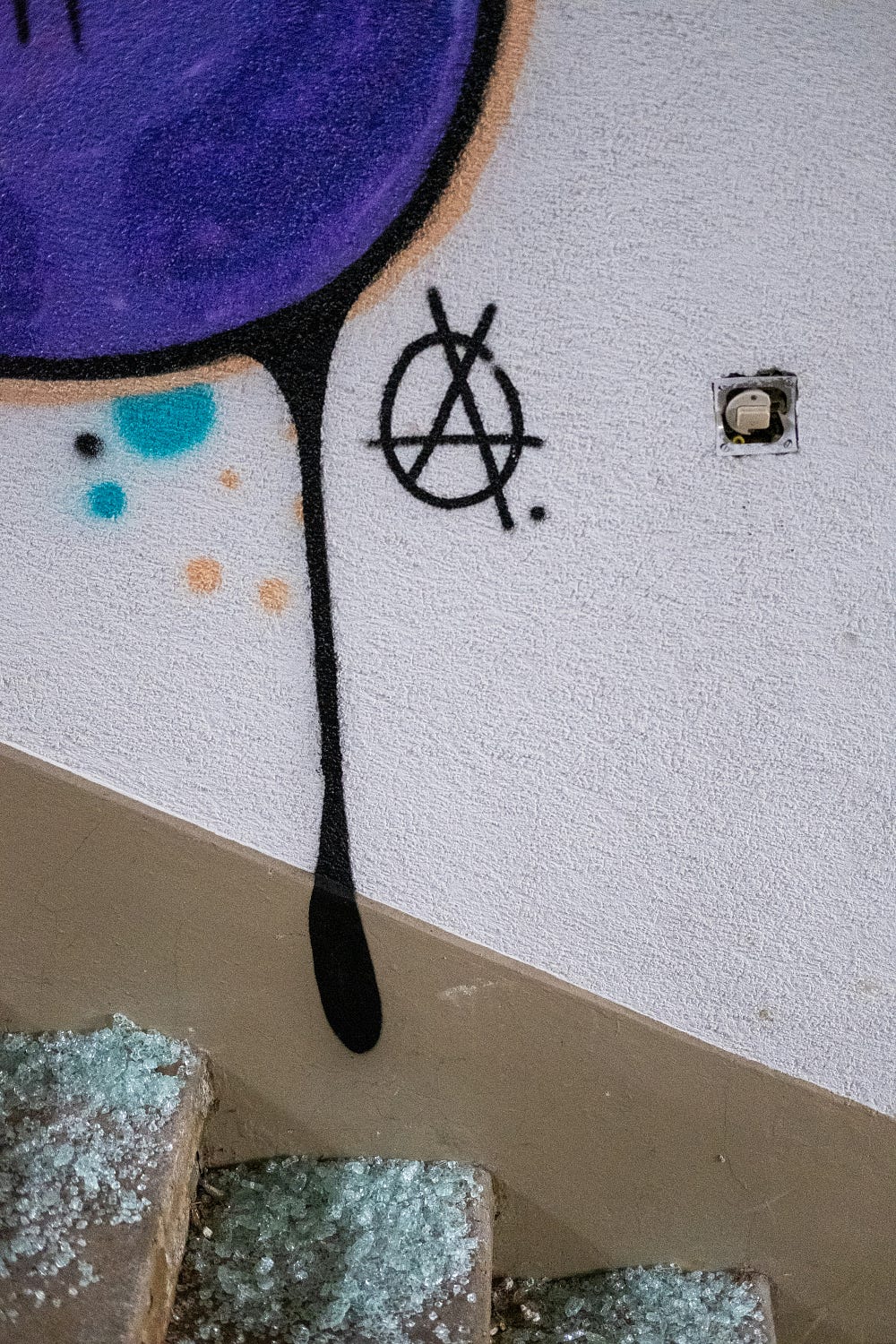
We should not only be feminists, but anarchists, in opposition to ALL unequal relationships of power.
As two expressions of the same system of oppression, the only way to dismantle the patriarchy is to dismantle the state.
Instead of campaigning to isolate men, we should be campaigning against the system that causes us to want to isolate men, the patriarchy.
What causes men to feel the need to exert control over women?
Society.
Anarcha-feminism is therefore the only way forward. We must come together to address the intersecting issues of misogyny and homophobia, poverty and racism, and reproductive rights so that we can all be free.
We must take a stance against all systems of oppression.
The patriarchy is a result of deeper-rooted problems, and swapping out misogyny for misandry is not the way to solve those problems…
Hate cannot drive out hate; only love can do that.
– Dr. Martin Luther King, Jr.
 ANARKISS