

In a world of polarities, where all we’re taught is black and white, Stone Butch Blues adds to what we know is really a rainbow.
How we choose to live in our bodies and our hearts is much more than a Dick-and-Jane reality.
Yesterday I read the Leslie Feinberg (1949–2014) novel, ‘Stone Butch Blues’ (1993), and all I can say is, WOW.
(Note: I will be using the acronym ‘SBB’ interchangeably throughout this review, which stands for the book title, Stone Butch Blues).
If you haven’t already read SBB, it’s one to be added to your to-be-read pile, with a fast-track pass straight to the top.
Considered a cult classic in LGBT communities, and rightfully so, Stone Butch Blues is a groundbreaking novel exploring the complexities of gender.
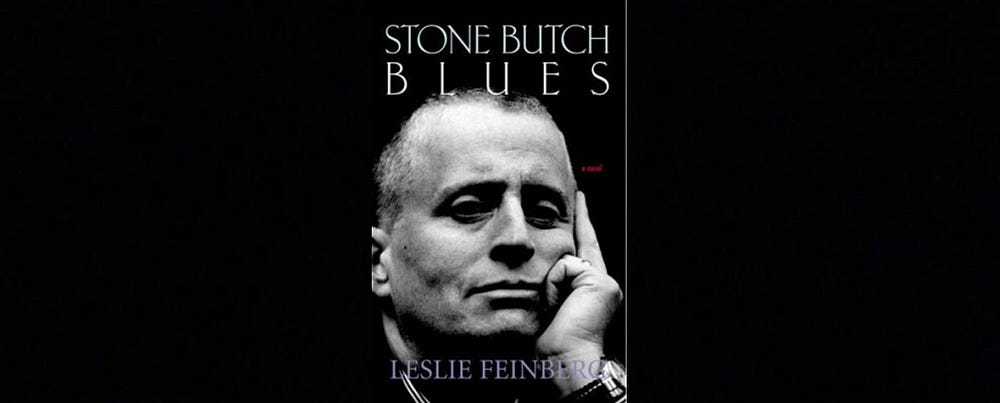
The novel, although sitting in the fiction category, (it was written from the perspective of a fictional character, a stone-butch lesbian named Jess Goldberg), is largely inspired by Feinberg (pictured below) and her own lived experiences as a working-class butch lesbian in late 20th-century New York.

Strangers who stare — their eyes angry, confused, intrigued. Woman or man: they are outraged that I confuse them. The only recognition I can find in their face is that I am ‘other.’ I am different.
I didn’t want to be different though. I longed to be everything grownups wanted, so they would love me. I followed all their rules and tried my best to please. But there was something about me that made them knit their eyebrows and frown. No one ever offered a name for what was wrong with me. That’s what made me afraid it was really bad. I only came to recognise its melody through this constant refrain:
“Is that a boy or a girl?”
Similarly to Feinberg’s own struggle to be accepted in society as a butch lesbian, frustrated by her gender non-conformity, Jess’ parents, the protagonist in Stone Top Blues, had her admitted to a psychiatric ward.
This was common in the 50’s at a time when homosexuality was still illegal.
Upon leaving the hospital, Jess moved to New York.
First stop? A gay bar.
It was there that Jess met Butch Al and Jacqueline who took her under their wing, offering Jess a place to stay and teaching her about lesbian culture.
Finding her place in the lesbian community didn’t, however, come without struggle (and lots of it).
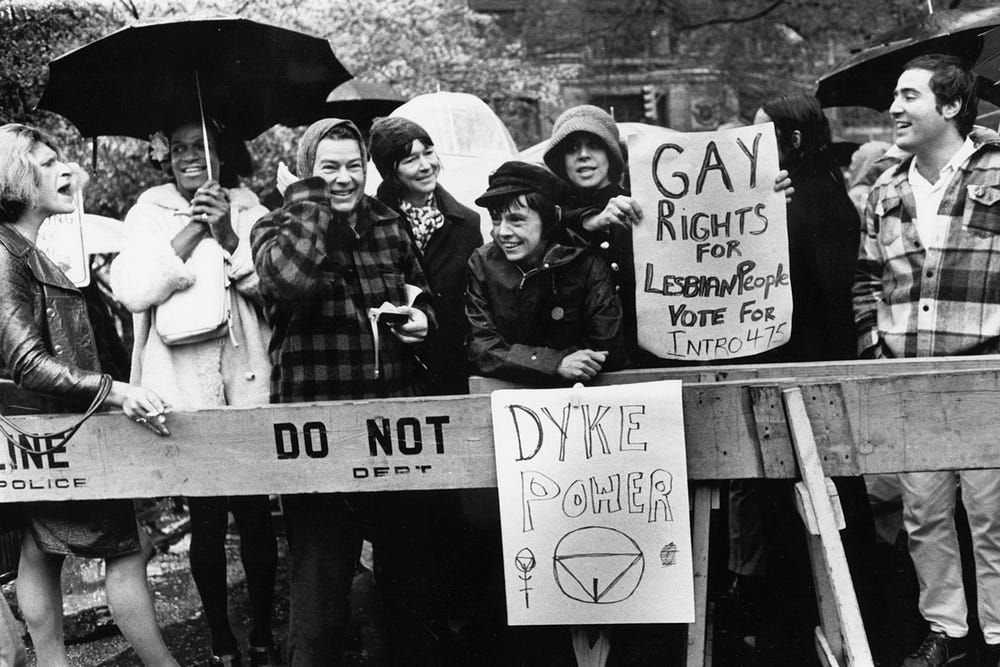
Gay bars were frequently subject to raids which saw Jess and her fellow queers being arrested, beaten, and raped by corrupt cops.
After multiple rapes at the hands of police, as a means to survive, having had enough of the world punishing her for being an unconventional woman, Jess decided to become a man.
Her partner Theresa, however, disapproved and they broke up as a result.

Being with Jess saw Theresa being subject to ridicule at feminist meetings, where other women would treat her love of butches as a betrayal of the feminist cause.
This is a narrative that we still see happening today in some cases, by people who view masculinity per/se as toxic, instead of identifying the real source of toxicity which lies in the patriarchy.
Unlike in heterosexual relationships, in lesbian relationships, there is no superior/inferior dynamic at play (or at least, there shouldn’t be). Even when the relationship is between a more masculine presenting woman and a more feminine presenting woman, the relationship isn’t governed by the same oppressive forces that all too often govern heterosexual relationships between men and women.

All I remembered was Jacqueline’s warning: You could make a woman feel real good with it or you could make her remember all the ways she’s ever been hurt …
Having been a ‘stone butch’ with her first partner, Angie, a femme sex worker, ‘the way I shut down emotionally when I feel scared and hurt and helpless and say funny little things that seem so out of context’, being with Theresa saw Jess softening her stony exterior.
Alas, following their breakup, Jess began taking testosterone, got chest reconstruction surgery, and began to pass as a male and escape from male violence.
While relieved to be safer in public, feeling exiled from womanhood and fearing her loss of visibility as a lesbian only added to Jess’s loneliness and she later went on to de-transition.
This part of the novel reminds us of the complexities of gender, and how gender identity and gender expression do not always align.
‘I can’t believe you’ve given me the sky to sleep under. But I can’t tell if it’s dawn or dusk you’ve painted.”
She smiled up at the ceiling. “It’s neither. It’s both. Does that unnerve you?”
I nodded slowly. “Yeah, in a funny way, it does.”
‘I figured that’, she said.
‘It’s a place inside of me I have to accept.’
Masculinity is not inseparable from men as femininity is not inseparable from women. Being masculine doesn’t make a woman any less of a woman if that is her gender identity.
“Is that a girl or a man?”
Joan flashed me an apologetic expression and turned back to Amy.
‘That’s Jess’, she said.
‘I don’t want another label. I just wish we had words so pretty we’d go out of our way to say them out loud.’
As the novel closes, Jess feels her life coming full circle. She enters into a relationship with her new neighbour, Ruth, a trans woman, and her fear is replaced with hope.
From butch and femme relationships to butch and butch relationships to transgender he/him lesbians, Feinberg does an incredible job of showcasing the beauty and tenderness of lesbian desire. So much so that I got through the book in just two days.
I was entranced.
Never had I felt more proud to be queer than upon reading about the struggle that we, as a community, have had to endure over the years simply for not conforming to the societally imposed norms surrounding gender and sexuality.
Never have I felt more seen.
It was a hard read, dealing with themes of rape and homophobia, as one can expect in a novel of this nature, but it was also filled with so many beautiful reminders of hope.
Beautiful reminders of our power, something that can never be taken away from us.
When even despite being at the receiving end of rape and death threats, we still didn’t, we still don’t let their hate towards us overpower our love for each other, what can be more inspiring than this?
Stone Butch Blues: A book about crossing boundaries and seeking home.
In 2012, Feinberg, whose last words were ‘remember me as a revolutionary communist’, recovered the rights to Stone Butch Blues.
Having made the decision to not sign any new contracts, Feinberg instead declared that the story would be ‘given back to the workers and oppressed of the world.’
And true to her word, a PDF of Stone Butch Blues is available for free to anyone with internet access HERE.
The present and past are the trajectory of the future, but the arc of history does not bend toward justice automatically. As the great Abolitionist Frederick Douglass observed, ‘without struggle, there is no progress…’
That’s what the characters in Stone Butch Blues fought for.
The last chapter of this saga of struggle has not yet been written.
 ANARKISS