

I want you to take a moment out of your day to ask yourself the following:
Why do I feel the need to label myself? Am I doing it to make myself feel more comfortable, or am I doing it to make other people feel less uncomfortable?
We have seemingly done a 360 as a society when it comes to self-expression and how we define it (if we define it).
In the late 70s, as Glam Rock gained in popularity, we had the likes of David Bowie and his alter ego, the ‘androgynous alien’ that was Ziggy Stardust.
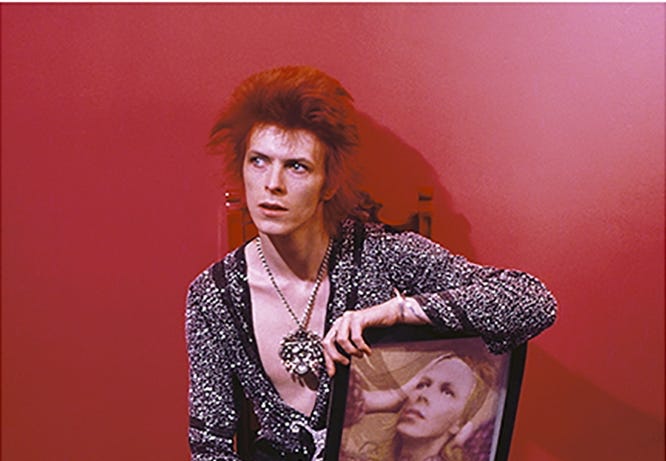
We had Robert Smith, frontman of The Cure.

We had Freddie Mercury and Elton John, Lou Reed and Patti Smith, Prince and Billy Idol, all of whom were challenging gender (non)conformity, and unapologetically so.
‘Are you a transvestite or a homosexual?’
“Sometimes.”
‘Which one?’
“I don’t know, what’s the difference?”
– In conversation with Lou Reed, 1972.
Glam rock, centred on boundary-pushing performances, showed us all a new way to live that was unphased by the constraints of gender. Widening the possibilities for multi-faceted and fragmented identities for everyone, it created a community that was undeterred by the societal imposed pressures to fit into a box.’Glam rock, centred on boundary-pushing performances, showed us all a new way to live that was unphased by the constraints of gender. Widening the possibilities for multi-faceted and fragmented identities for everyone, it created a community that was undeterred by the societal imposed pressures to fit into a box.
‘Male?’
(no).
‘Female?’
(no).
Androgynous alien.
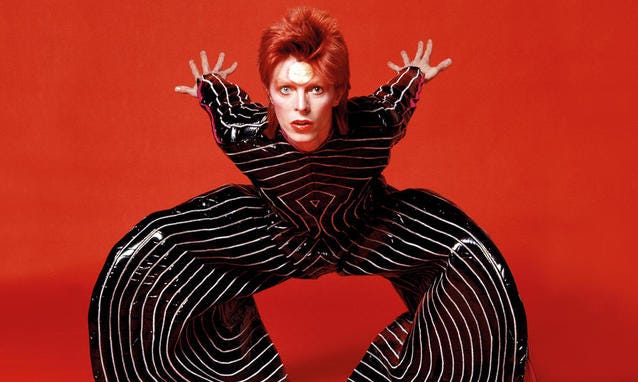
While we were celebrating diversity in the media, through film, (think The Rocky Horror Show), and music, (think Bowie), in society at large, subverting gender binaries and resisting labels in a world that demands them made for, not only an uncomfortable life due to the threat of unwanted stares, but also a dangerous one due to the threat of violence.
As was highlighted in Leslie Feinberg’s revolutionary novel, Stone Butch Blues, police raids on mid-twentieth-century queer bars regularly led to the arrest of butch lesbians, trans women, and gay men in drag for violating cross-dressing* law.
*(Cross-dressing, ‘wearing a dress not belonging to his or her sex’, was illegal in the 1900s, ‘too much of a threat’).
Hard to believe that it was illegal then for a woman to wear trousers, or for two women or two men to sway to music together…
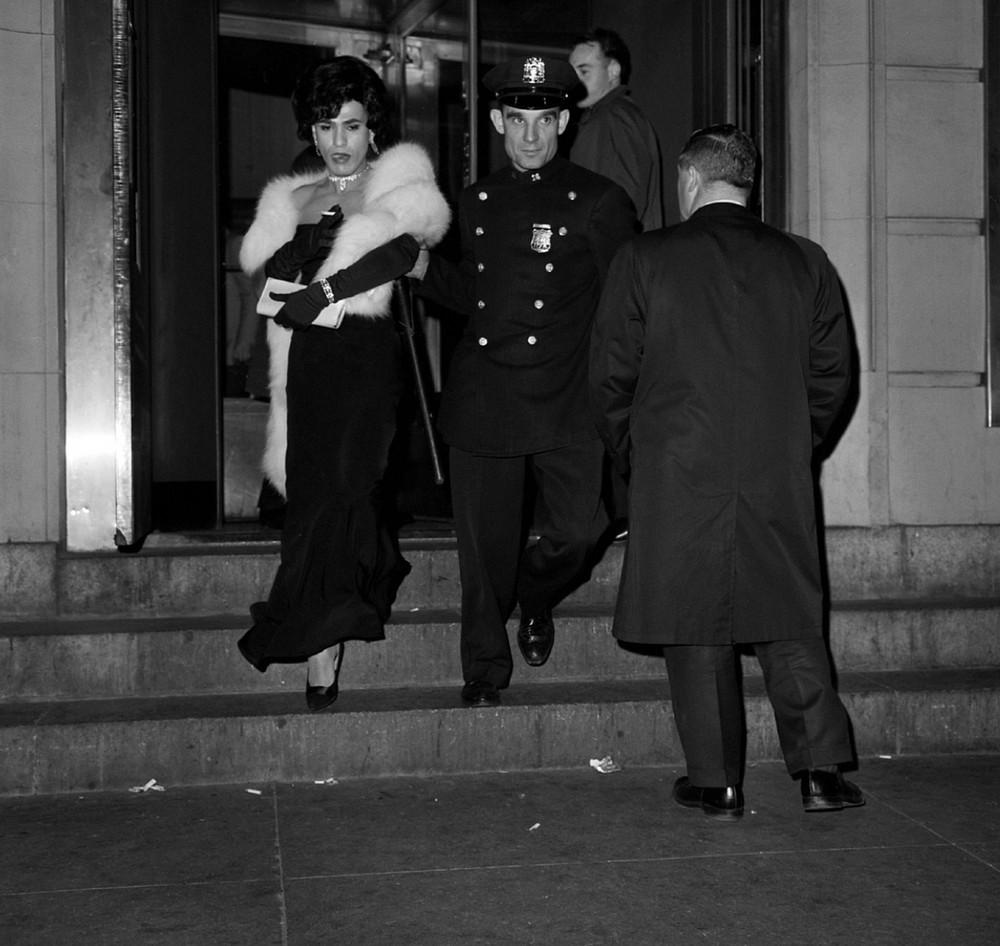
Firsthand accounts of these raids describe police enforcing a “three items of clothing” rule that required people to wear three articles of gender-appropriate clothing or face arrest.
The crime?
‘The subversion of established gendered and sexual categories of male and female, masculine and feminine, heterosexual and homosexual; its capacity to undermine social hierarchy, gender order, and the rigid contemporary boundaries of acceptable sexual conduct.’

It’s all about control (male on female), where it is often difficult, if not impossible, to untangle masculinity from the oppression of women, as social structures wed masculinity to maleness, and maleness to power and domination.
It is for this reason that stereotypes relating to lesbian relationships exist.
‘Who’s the man?’
When what you’re really being asked is:
‘Who’s the oppressor?’
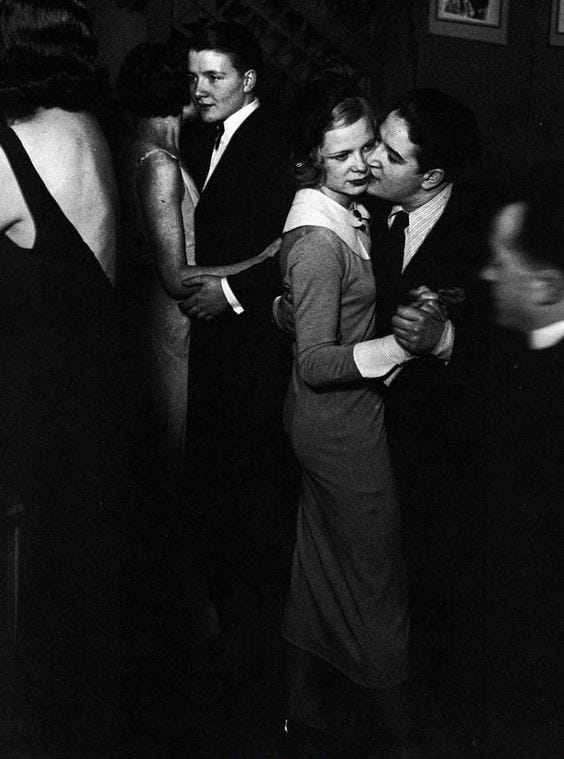
Seemingly, there must be a man in every relationship, even when the whole point of the relationship is that there is no man, because who else would reproduce misogyny?
It’s all about control.
‘A cop knelt and kissed the feet of a priest, and a queer threw up at the sight of that.’
It’s all about capitalism.

When does self-expression stop being for one’s self and become an act for everyone else?…
‘Self-expression’ should be for ourselves, a clue in the name, ‘SELF-expression…’ Yet it has become something political, something that must be definable where it is not enough for people to just be anymore…
‘What are your pronouns?’
(Why does it matter)?
‘Human.’
We’re all human beings going through the same experience, the ‘self’ being an invention of a society that is priming us to become perfectly passive.
In such a society, we are expected to conform to the stereotypes and normative standards that are fed to us via agents of capitalism and consumerism daily, for gender nonconformity poses a threat to the status quo…
When we comply, when we neatly fit into the box of either masculine or feminine, we are easy to manipulate and control with targeted marketing campaigns.
We buy ‘X’ if we’re female, and ‘Y’ if we’re male.
We are marketable.
When we resist authority, however, when we begin to forge our own way via the queer desire to disobey and disregard, not so much…
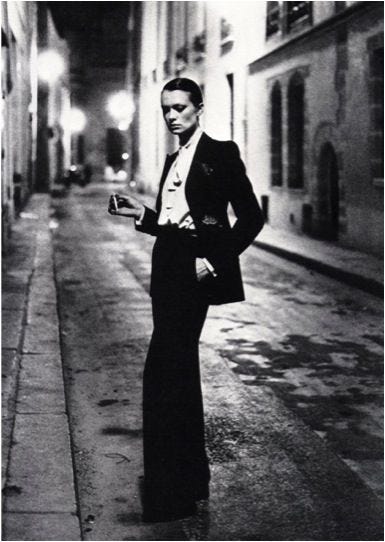
Strangers, their eyes angry and confused, stare.
Heads turning when I walk down the street, ‘Woman or man?’, they are outraged that I confuse them. The only recognition I can find in their face is that I am ‘other.’
I am ‘different.‘
And because we’ve been taught to hate people who are different, it has been pumped into our brains, it keeps everybody fighting each other.
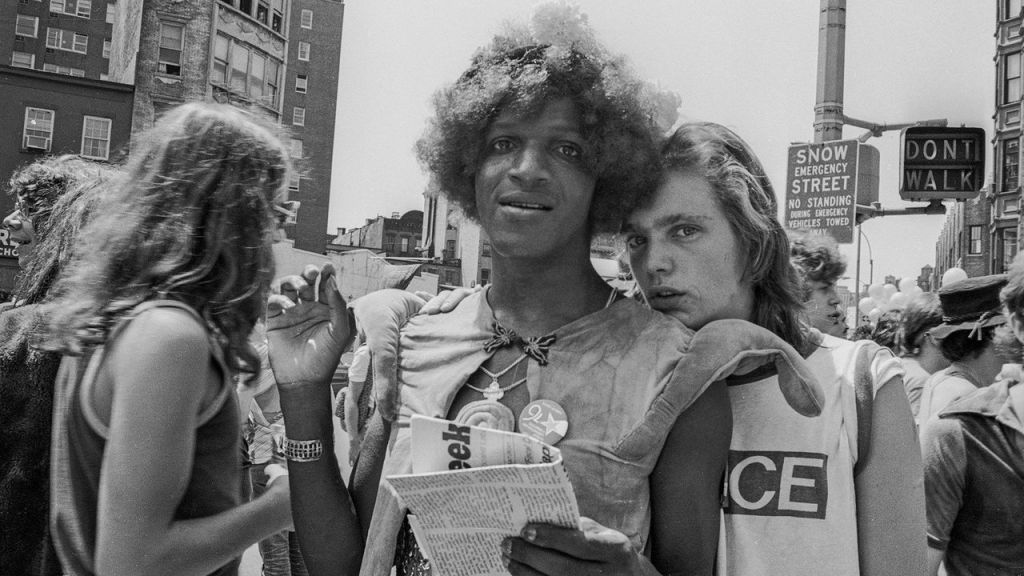
As Judith Butler, the American philosopher and gender studies scholar notes, however, such hate is completely misguided when ‘gender is a performance, where the attributes of masculinity and femininity are merely ideological mechanisms that are assigned to biological sex by society, rather than being innate.’
“Is that a girl or a man?”
Joan flashed me an apologetic expression and turned back to Amy.
‘That’s Jess’, she said.
Gender = self-expression, not anatomy.
The reality is that masculinity extends far beyond the male body, as femininity extends beyond the female body.
Therefore, when people question why you want to ‘look like a man’, ask them, ‘Why is it so hard for you to see me as a woman?’
What is it about seeing a powerful woman that makes you feel so uncomfortable?

The assumption that women are the weaker sex is one that is upheld by the patriarchy which is designed to keep men in positions of superiority and women in positions of inferiority.
If a young girl expresses a desire to wear boys’ clothes, she’s just a ‘tomboy’, ‘it’s just a phase.’ If a young boy wants to wear girls’ clothes, however… It’s a different story, proof that female gender deviance is much more tolerated than male gender deviance (and unsurprisingly so)…
When masculinity comes with enormous social privilege:
Male femininity = loss of value
Female masculinity = elevated status
Why would any boy want to be a girl?
Why would any girl not want to be a boy?
Fuelling exactly the type of small-mindedness that sees toxic masculinity thriving, we have a misconstrued idea of what constitutes masculinity, having been predominantly shown examples of toxic masculinity in the media and society at large growing up.
What is the use of being a little boy if you are growing up to be a man?
– Gertrude Stein.
Alas, toxic masculinity isn’t masculinity per/se, as women prove in their depictions of masculinity.
(As in butch lesbians, for example).
Defying the ‘man’-made boundaries of gender…
Performing strength without being violent, and ‘sexiness’ without being predatory, butchness is the audacious rejection of the male gaze — a not-so-subtle middle finger to male dominance and its stifling grip around the confines of what womanhood should be.
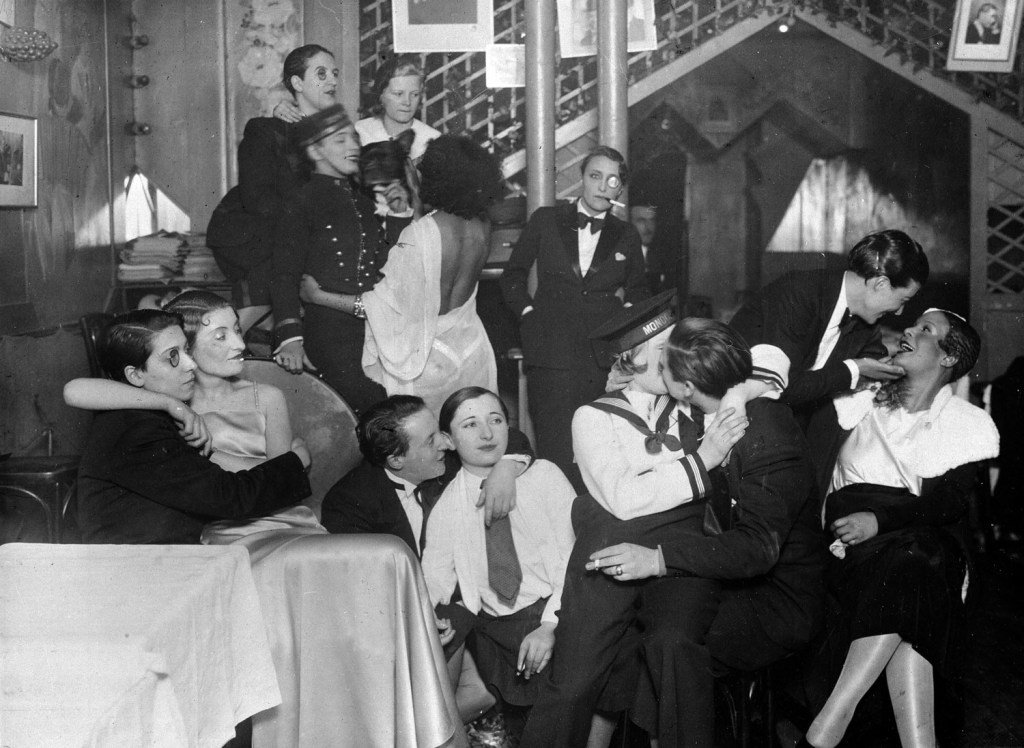
A free-floating aspect of identity, gender should be assumed by choice rather than being culturally enforced.
‘We’re all born naked and the rest is drag.’
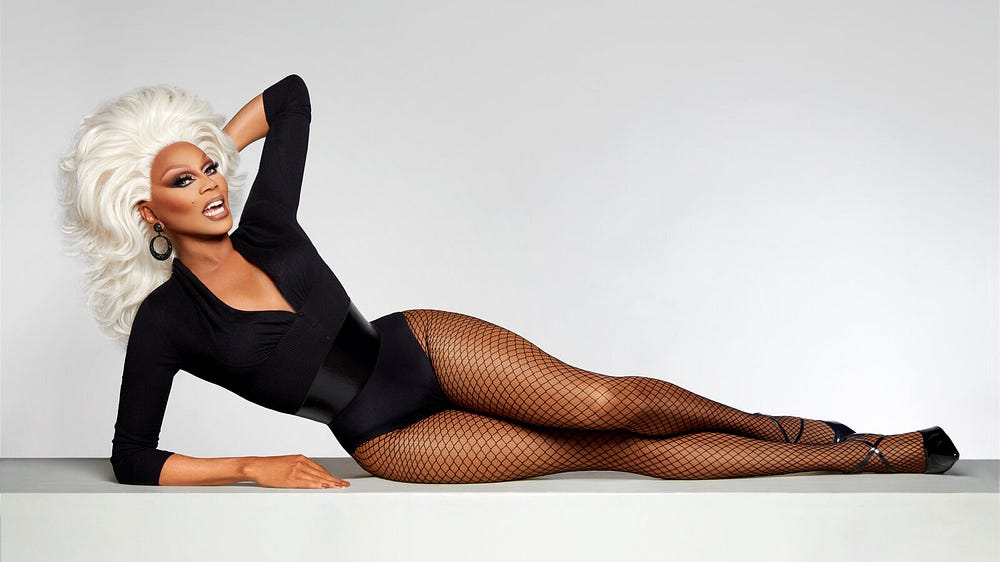
We are assigned our sex at birth, our gender too based on stereotypes of what it means to be a girl and what it means to be a boy, but as we grow older, some people sustain it while others subvert it as they recreate their gender along the way.
He/him/his for someone who identifies as male.
She/her/hers for someone who identifies as female.
They/them/their for someone who identifies as neither male nor female.
We learn to occupy this space we call home along the way.
I have been locked by the lawless.
Handcuffed by the haters.
Gagged by the greedy.
And, if I know anything at all,
it’s that a wall is just a wall
and nothing more at all.
It can be broken down.
– I believe in living, Assata Shakur.

Learning to enjoy life in all its multifacetedness, I embrace masculinity and femininity and everything in between.
‘I don’t want another label. I just wish we had words so pretty we’d go out of our way to say them out loud.’
Genderqueer, fixed in the undefinable, enjoying the performance of gender on the stage that is life, I am human, having become as concerned with the pronoun ‘we’ as I am with the pronouns ‘she’ and ‘he.’
Why can’t society just let us all be human?
Is that not enough?
‘I can’t believe you’ve given me the sky to sleep under. But I can’t tell if it’s dawn or dusk you’ve painted.’
She smiled up at the ceiling. ‘It’s neither. It’s both. Does that unnerve you?’
I nodded slowly. ‘Yeah, in a funny way, it does.’
‘I figured that’, she said. ‘It’s a place inside of me I have to accept.’

She/he/they
(indifferent).
Human.
Je ne sais quoi.
Recommended reading:
- Stone Butch Blues, Leslie Feinberg
- Transgender Liberation, Leslie Feinberg (read the pamphlet for free here).
- Female Masculinity, Judith (Jack) Halberstam
- Gender Trouble, Judith Butler

 ANARKISS