

Some people claim that being gay is a mental illness, a sad excuse of homophobia.
‘You need help’, they tell us, as though their bigotry is them ‘looking out for us.’
Offering us the solution via conversion therapy, through administering electric shocks every time we see a photo of someone of the same sex until negative associations are formed.
‘Same-sex attraction=pain=no longer gay.’
Through hypnosis, ‘exorcism’, even, ‘corrective rape’, ‘we can cure you’, they say, as though love is something that needs to be cured, as though love is something that can be cured…
(Dislaimer: It can’t [be cured]. For we are not ‘broken.’ We do not need ‘fixing’)…
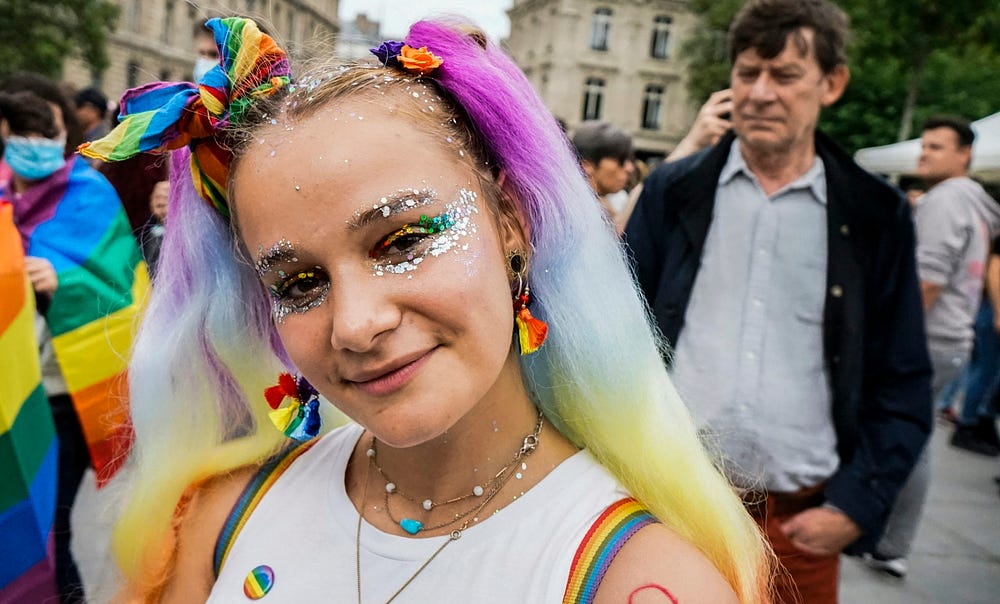
You can’t cure something when there is nothing there to cure/when being gay is as natural as being straight. But, unfortunately, people have been trying to ‘cure’ us for decades…
And people still are [trying to ‘cure’ us], in fact, when the reality is that conversion therapy is only banned in 14 countries around the world, for which, something that might surprise you, the UK is not one of those countries…
Despite publically stating their intentions for a ban in 2018, six years have passed and we are seemingly no closer to having that ban actually implemented.
The government cites complexities including ‘a desire to avoid criminalising exploratory conversations, therapies, and religious counselling’ as reason for their reluctancy to implement the ban…
In support of this counterargument is The ‘Evangelical Alliance’, the UK’s largest evangelical body which represents 3500 churches in the UK. The Evangelical Alliance claims that to ban conversion therapy would be to restrict their religious freedom.
It could place church leaders at risk of prosecution. This will threaten the everyday practices of churches, church leaders, and Christians across the UK.
What about the threat that NOT banning conversion therapy poses to the LGBTQ+ community?
As this BBC article states, about 5% of the 108,000 people who responded to the government’s LGBT Survey in 2018, said that they had been offered some form of conversion therapy.
Rooted in religion, more than half of those who had received the therapy said that it had been conducted by a faith group.
‘A man shall not lie with a man the way he lies with a woman.’
Some religious groups are trying to get around the proposed ban by, not offering conversion therapy to stop people experiencing same-sex attraction (because, after all, that is impossible), but to stop people from acting on same-sex attraction.
One example of a religious group who are trying to do this is a Catholic Church group called Courage International.
The organisation offers “pastoral support” to people who are attracted to the same sex but want to “strive for chastity” (avoid all sex).
But, what sort of life is that?…
Spending the entirety of your life denying who you are, suppressing your desires, what sort of life is that?
(It’s not a life at all)…
Preying on those who are vulnerable, as Blair Anderson from the End Conversion Therapy Campaign said:
No one is born hating themselves. If someone is volunteering [to have conversion therapy], it’s often not of their own accord. It’s because they’re surrounded by people who are pressuring them or manipulating them.
This is a sentiment that is echoed by Justin Beck (pictured below) who grew up in an Evangelical Christian household. Upon realising that he was attracted to other boys at the age of 13, he turned to the bible. Desperate to be cured of what the bible told him was ‘wrong’, a ‘sin’, Beck underwent conversion therapy from the age of 17 to 23.
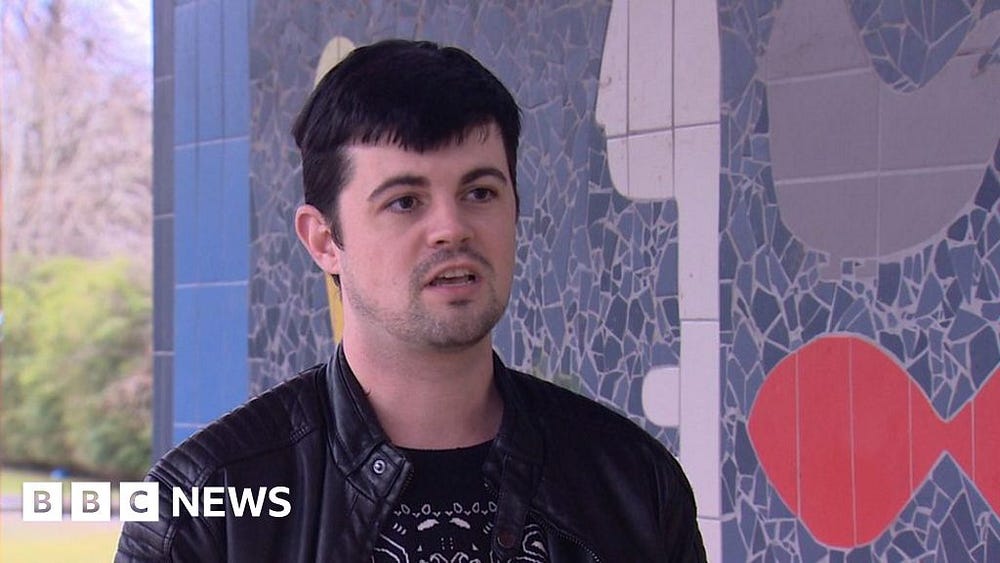
As Justin tells the BBC here regarding his experience with conversion therapy, ‘It was my choice, but I was in a very vulnerable position. No one in my life had ever told me “You’re gay and that’s ok”.
Beck says the experience left him ‘emotionally traumatised.’
When I look back at that period of my life, the overwhelming emotion that I can remember is loneliness.
I had absolutely zero self-esteem. I hated everything about myself, genuinely believing that I was evil or had something fundamentally wrong with me. I would walk with my head down, avoiding mirrors and windows as I despised what I saw. I was suicidal, stock-piling medication all over my bedroom and in my car, and fully intending on taking my own life.
Conversion therapy: It can’t ‘cure’ you, but it can kill you…
LGBTQ+ youth who have undergone conversion therapy are more than twice as likely to have attempted suicide multiple times following the experience, as this study reports…
Why? Because, as the case of Justin Beck highlights above, a common theme amongst LGBTQ+ people when it comes to accepting their sexuality is loneliness…

In a survey conducted by Stonewall, only half of lesbian, gay, and bisexual people (46%) and trans people (47%) reported feeling able to be open about their sexual orientation or gender identity to everyone in their family.
This is due, not only to discrimination from the world at large, (official statistics published last year highlight how hate crimes on the basis of sexual orientation are at record highs- up by 112% in the last five years*), but also from ourselves, via internalised homophobia.
*(And these statistics provide only a snapshot of the reality, with the vast majority of victims not reporting their experiences to the police. In fact, the Government’s own statistics suggest that fewer than one in ten LGBTQ+ people report hate crimes to the authorities)…
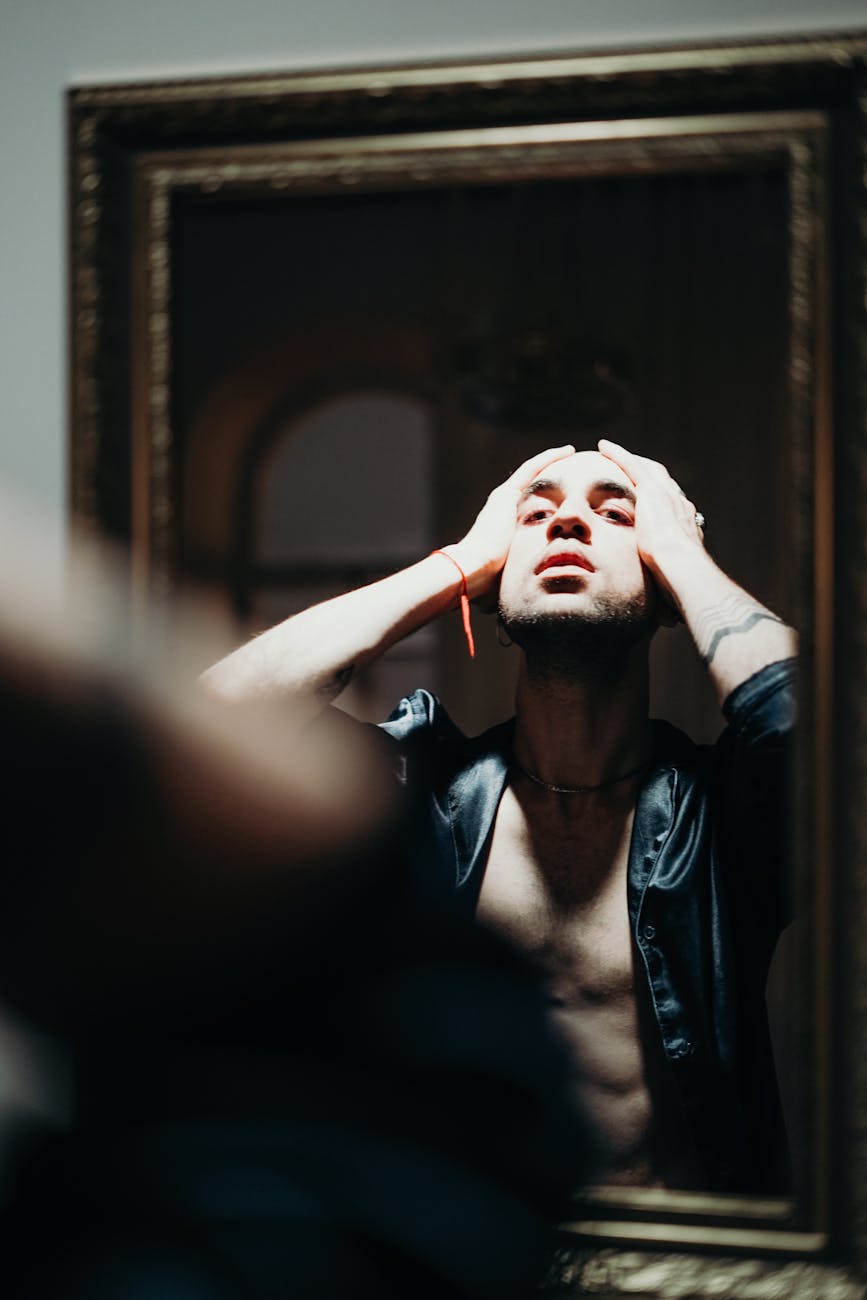
Evidently, then, homophobia is still rife in society.
While it can be easy to think that ‘everything is better now’ when social media shows us greater representation and diversity, the reality is that social media is a ‘bubble.’ The algorithm works by showing us that which aligns with our own values and beliefs. If we interact with LGBTQ+ creators, then we will be shown more LGBTQ+ content.
My ‘for you page’ on TikTok, for example, is 90% queer content because, as a queer woman myself, that is what I interact with the most.
But where social media, the algorithm, is a ‘bubble’, it’s not an accurate representation of real life, something which is heartbreakingly realised by people who are still at the receiving end of verbal and physical abuse for being gay…
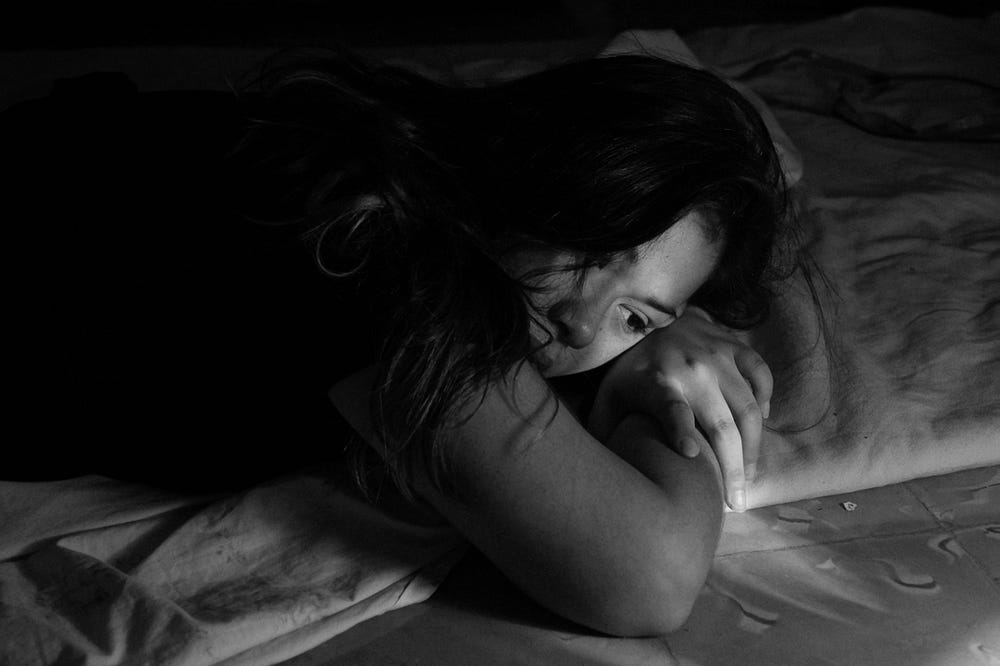
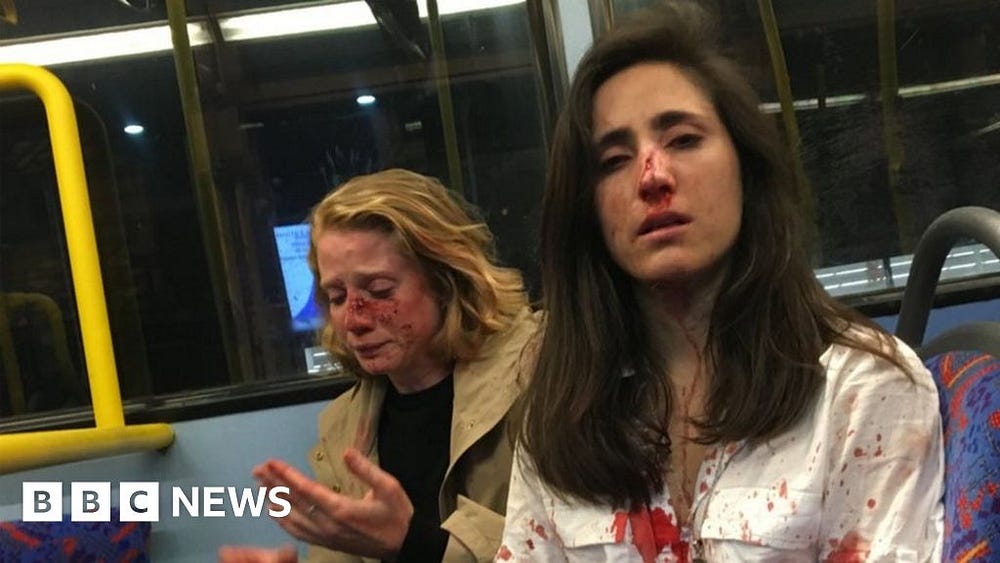
In 2019, two women were attacked on a bus in London after refusing to kiss.
A group of young men began harassing the women upon discovering that they were a couple, asking them to kiss while making sexual gestures. When they refused, they were attacked before the teenagers, aged between 15 and 18, fled, leaving the two women covered in blood and, unsurprisingly, traumatised from the experience…
Following the attack, government research found that more than two-thirds of LGBTQ+ people said that they had avoided holding hands with a same-sex partner in public for fear of a negative reaction from others.
Again, evidence that homophobia is still rife in society…
If only people who are homophobic could feel what we felt though, when as kids all our friends would talk about the people they fancied and we just couldn’t relate, ‘What is wrong with me?’, then they would know that being gay is not a choice, that there isn’t anything ‘wrong’ with us, that this is just who we are, that this is just who we love…
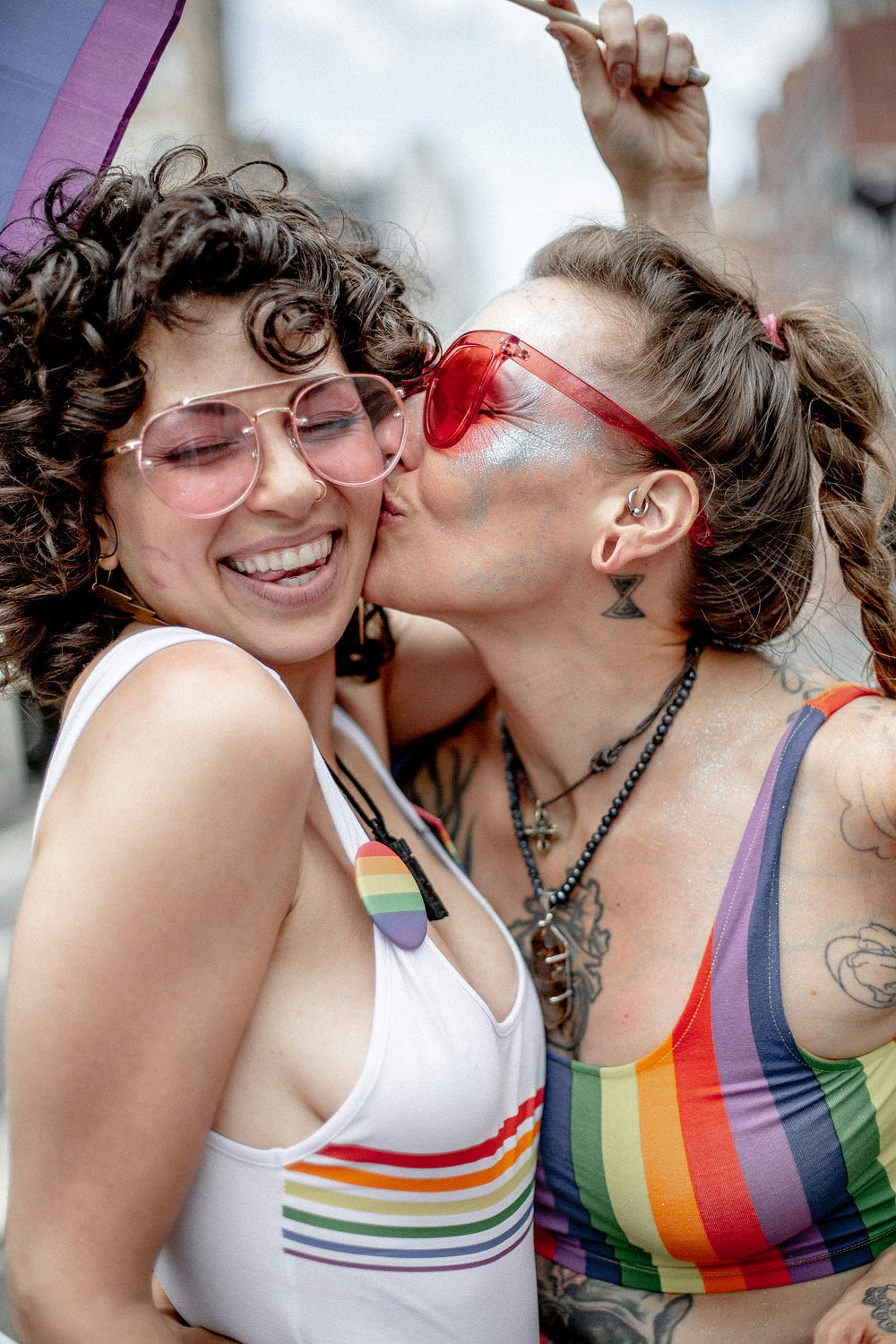
Just a kid consumed by the enormity of her desires.
(From the age of 10).
I didn’t know that there was a name for it then, but the first time that I experienced same-sex attraction was at the age of 10.
Now, at 10 years old, being gay was not a ‘choice’ that I made…
I didn’t wake up at the age of 10 thinking; ‘You know what? I want to make the rest of my life ten times harder for myself. I want to put myself in a position where I’m going to be sexualised by men for loving women (something which doesn’t even make any rational sense). I want to be on the receiving end of death stares at best, death threats, death at worst, by people who just can’t comprehend what I am, who I am. I want to run the risk of being attacked every time I leave the house for holding my partner’s hand. I want to spend my entire adolescence trying to suppress who I am, feeling guilty because of these feelings that, try as I might, just will not…go… away. I try to shove them down but they’re always just… there.’
I didn’t wake up one day and make that choice ( ^ ) for this to be my life, because sexuality is as much of a choice as our natural hair colour is a choice.
(That is to say, it’s not a choice at all)…
Like our hair colour, our sexuality is on the same level of unchangeable…
While I can dye my hair blonde, or pink, or blue, or whatever colour I want to dye it, my natural colour will always be brown. And likewise, while gay people can undergo conversion therapy, or practice celibacy, or force themselves to be in heterosexual relationships, the fact is that when sexuality is as natural as our hair colour, it will never actually change.
We can cover it, we can suppress it, but who we are stays the same.
So please, stop telling us that who we are is a source of shame/something that we need so-called ‘therapy’ to change…
Equality is impossible to achieve in a society where conversion therapy is still permissible.
The end of this week (Saturday 1st June) marks the start of pride month, a celebration born from our struggle for our right to freedom to love who we love, and a common argument against pride that I hear from people is,
‘Why is there no straight pride?’
‘Why do we still have pride every year when equality exists now?’
And the answer, to anyone who thinks that way, lies in everything that I have discussed in this piece today…
When even in one of the most progressive countries in the world, the UK, hate crimes are still taking place against gay people…
When we are being told that who we are is ‘wrong’ and offered up a ‘cure’ via conversion therapy, still, in 2024, we cannot say that there is equality.
And so, we must keep fighting, refusing to hide ourselves away, and celebrating being gay (because, despite all the struggle, there is so much joy to celebrate)…
Like the ability to construct our own identities away from the predetermined gender roles that exist to uphold the patriarchy and satisfy the male gaze.
Like the fact that we are automatically a part of a community that is centered on love, and freedom, and social justice simply by virtue of being gay.
When society has made our right to exist political, by virtue of us being here (and queer), we are surrounded by progression and liberalism.
A warm hug, a hand on the shoulder, we march together because we all know how it feels.
The bittersweetness of it:
Hating the oppressor, but loving the connection that we form with strangers who just…
‘get it.’
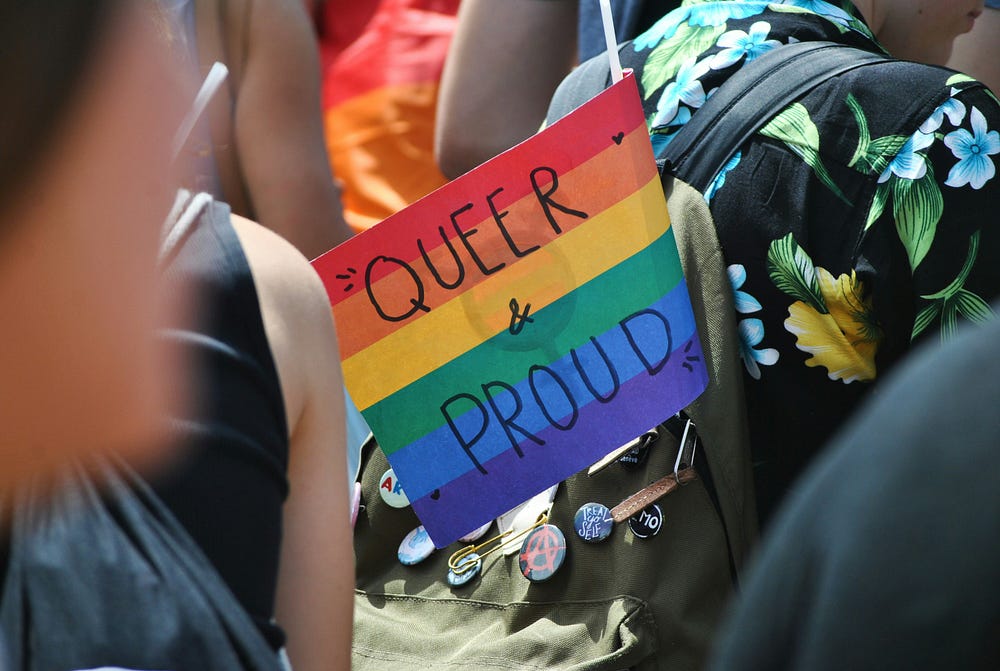
Happy Pride 🌈 x
May we all keep fighting the good fight.
 ANARKISS