
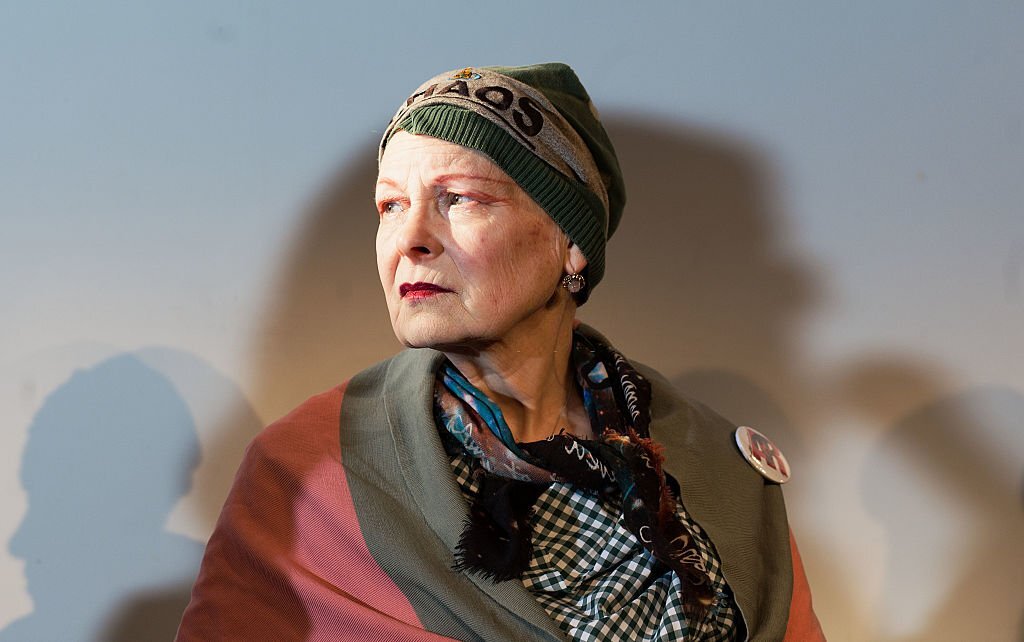
Vivienne’s success was brought forth from humble beginnings.
Working-class, female, and northern, Vivienne Westwood (Vivienne Isabel Swire) was born in 1941, the oldest of three children, to a factory worker, Gordon Swire, and a cotton weaver, Dora Swire in Glossop, Derbyshire.

At the age of 17, Westwood and her family moved to Harrow in London, where Westwood would take a jewelry and silversmith course at the University of Westminster (briefly).
Leaving after just one term she is quoted as saying:
I didn’t know how a working-class girl like me could possibly make a living in the art world.
(as we now know, how wrong she was)…
After subsequently taking a job in a factory and studying at a teacher-training college, Westwood became a primary school teacher. During this period, she enrolled in jewelry-making classes with her wages, something which subsequently saw her going on to create her own jewelry, which she sold at a stall on Portobello Road.
As I said, ‘from humble beginnings…’

From humble beginnings to punk icon
Westwood met her partner, Malcolm McLaren, in 1965 after splitting with her first husband, Derek Westwood to whom she had one son, Benjamin (Ben Westwood is now 61 and a photographer of erotica, following in his mother’s creative footsteps, as is her second son to McLaren, Joseph Corré 56, who is the founder of the lingerie brand, ‘Agent Provocateur).’
Vivienne Westwood would create the clothes which McLaren, a fashion designer, had designed.
I did not see myself as a fashion designer, but as someone who wished to confront the rotten status quo through the way I dressed and dressed others.
– Vivienne Westwood.
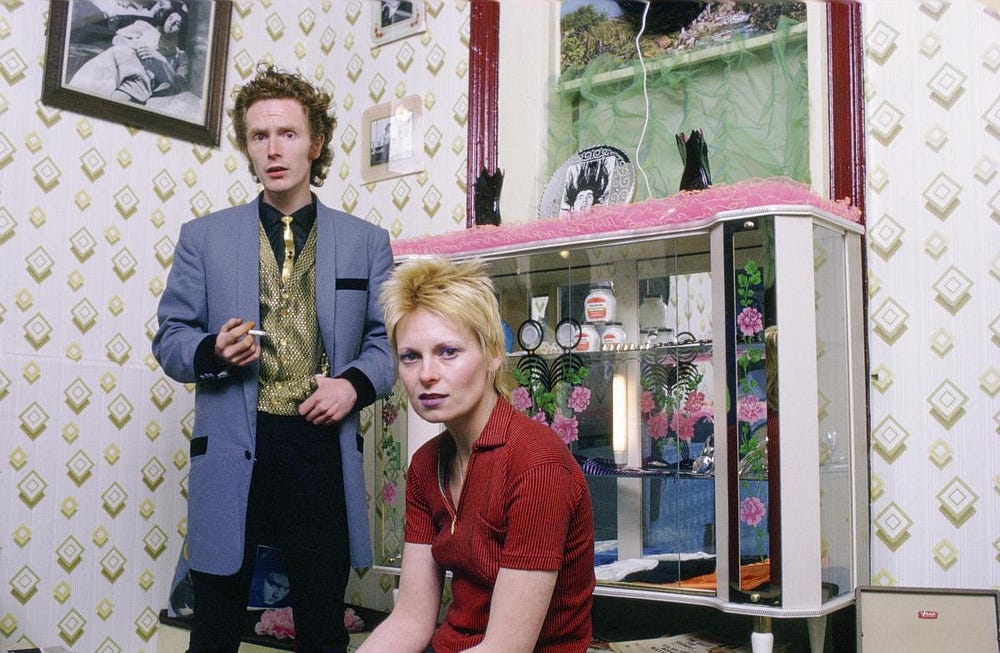
Deeply political, her art had a purpose.
Intentionally provocative- ‘anti-establishment’, with designs reflecting the economic, social, and political contexts of 1970s Britain, and later, fetish and sado-masochism, Westwood was never one to shy away from making a statement with fashion.
It’s very important to look great if you want to make a point because then people will listen to you more.
In holding a middle finger up to the upper classes, she sought to inspire the disillusioned youth of Britain into political action by challenging the status quo.

I’ve constantly tried to provoke people into thinking afresh and for themselves, to escape their inhibitions and programming.
Vivienne and Malcolm used clothes to shock, irritate, and provoke a reaction.
But also, to inspire change.

How it all began
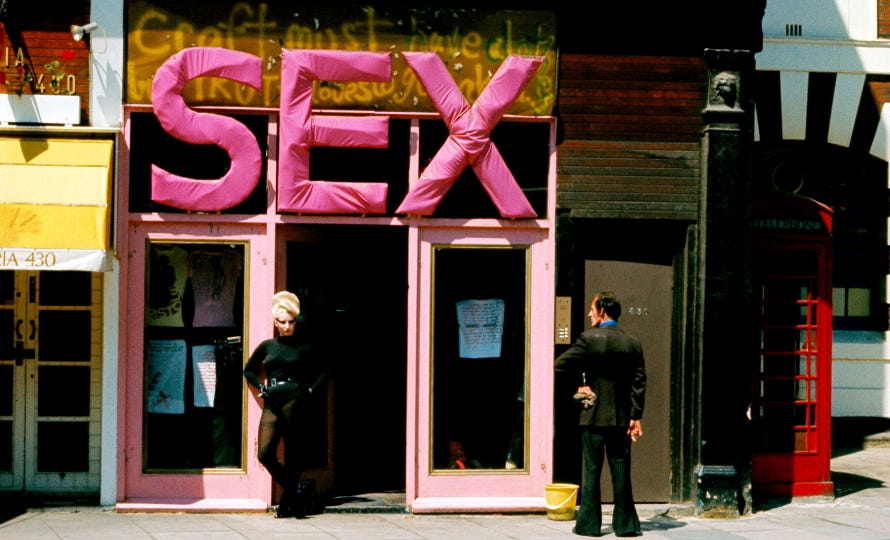
Vivienne began by designing and making Teddy Boy clothes for Malcolm in 1971, when they opened a small boutique called ‘Let it Rock’ at number 430 Kings Road, Chelsea in London. Let it Rock catered to the Teddy Boy Subculture — draped jackets, a lot of leather, and clunky shoes.
A year later, however, Vivienne re-branded as ‘Too Fast to Live, Too Young to Die’, with her interests having turned to biker clothing, zips, and leather (a more ‘rocker’ aesthetic).
It was around that time when clothes were gaining popularity among the subculture youth, who would meet up to hang out in the shop like it was a networking place.
This is how the Sex Pistols were born, via a(nother) rebranding, this time to ‘SEX’ (Slogan: rubberwear for the office’), where sexual fetishism and bondage were transformed into fashion, ‘punk rock’, as it was labelled by the media…
With its walls scrawled with graffiti from the SCUM Manifesto — the radical feminist writings of Valerie Solanas, the more controversial style of fashion sold at SEX saw Westwood and McLaren being prosecuted in 1975 under the 1959 Obscene Publications Act, which made it an offense to publish “obscene” material and gave the police powers to seize items they deemed explicit.
The source of their prosecution? A ‘gay cowboy’ shirt (pictured below).

Of the youth who frequented SEX, were who would go on to become employees, most notably, Jordan (below).

In her rubber clothes and theatrical make-up, British rail would put Jordan in first class during her daily commute to work, ‘for her own protection/so as not to “upset” other passengers’, they said.
People would say to me:
‘What the fuck do you think you look like?’ They didn’t realise that how I looked was what I was trying to tell them.
Who else frequented SEX?
The Sex Pistols were formed in 1975 off the back of the members, Jonny Rotten, Steve Jones, Paul Cook, Glen Matlock, and later, Sid Vicious, being some of the ‘punk youth’ who would regularly meet at the West London store.
McLaren managed the band, with both his and Westwood’s views influencing The Sex Pistols songwriting, in which their songs about politics and social conditions resonated with alienated working-class British youth.
And the band were, of course, kitted out in Westwood’s clothes to mirror their anarchist ethos, with The Sex Pistols first single being aptly named ‘Anarchy in the U.K.’

What started off as a way to promote the store in Mclaren’s formulation of the Sex Pistols, became something so much bigger…
So much so that SEX was rebranded again in 1976, for the final time under Westwood and Mclaren as Seditionaries (seditionaires became ‘Worlds End’ in 1980 after their relationship came to an end), with the inventory reflecting the surging popularity of the Sex Pistols.
‘Seditionaries’ read the brass plaque on the wall outside, ‘is for soldiers, prostitutes, dykes, and punks.’

Most famous of Westwood and McLaren’s controversial pieces was the “God Save the Queen” t-shirt (design pictured above) which was created by the duo in 1977, the same year that Queen Elizabeth was to celebrate her Silver Jubilee, and when The Sex Pistols second single was released under the same name (‘God Save the Queen’).
The t-shirt represented what Punk culture stood for:
Non-conformity, direct action, and rebellion.
“God save the queen / The fascist regime / … She ain’t no human being…”
Little did Westwood know back in the 70s that, despite her anti-establishment attitude and rebellious nature, as above, she would later form a relationship with the Royal Family.
In fact, something that few people know is that the Vivienne Westwood logo itself was inspired by the Royal Family- inspired by an encounter with our now King (then prince), Charles…

The famous ‘orb’ logo (pictured above) was created in 1986, off the back of a wool jumper designed for Charles to wear when off-duty. The orb represents that which is found on the crown jewels, with the rings of Saturn being added to bring a future aesthetic to the design/to represent a bringing of the past into the future.
Taking a symbol of the establishment and appropriating it for her own defiant ends, her fashion was never intended to conform.
Despite being ‘anti-establishment’, in 1991, Westwood was invited to attend Buckingham Palace after being named British Designer of the Year, and in 1992, she was appointed an OBE for services to fashion design.
Upon receiving her medal from the late Queen at Buckingham Palace, leaving, she twirled for the cameras, her skirt purposefully lifting to reveal a pair of sheer tights and nothing underneath.
Forever one to push the boundaries…

Evidently, Westwood was a rebel, but never without a cause. She worked tirelessly to raise awareness of the climate emergency many years before it was fashionable. She supported Aids Research, PETA, and Oxfam. She gave hundreds of thousands to the Green Party. She also fronted several campaigns, one of the most famous being in 1989 when she appeared on the cover of Tatler dressed as Prime Minister Margaret Thatcher. The cover bore the caption “This woman was once a punk”, and was included in The Guardian’s list of the best-ever UK magazine covers.

Westwood even drove a tank to David Cameron’s house in 2015, as a protest against fracking. This came after an announcement by Cameron’s government that it would offer licenses for fracking in 27 locations in the U.K.

And her protests carried on right until the end.
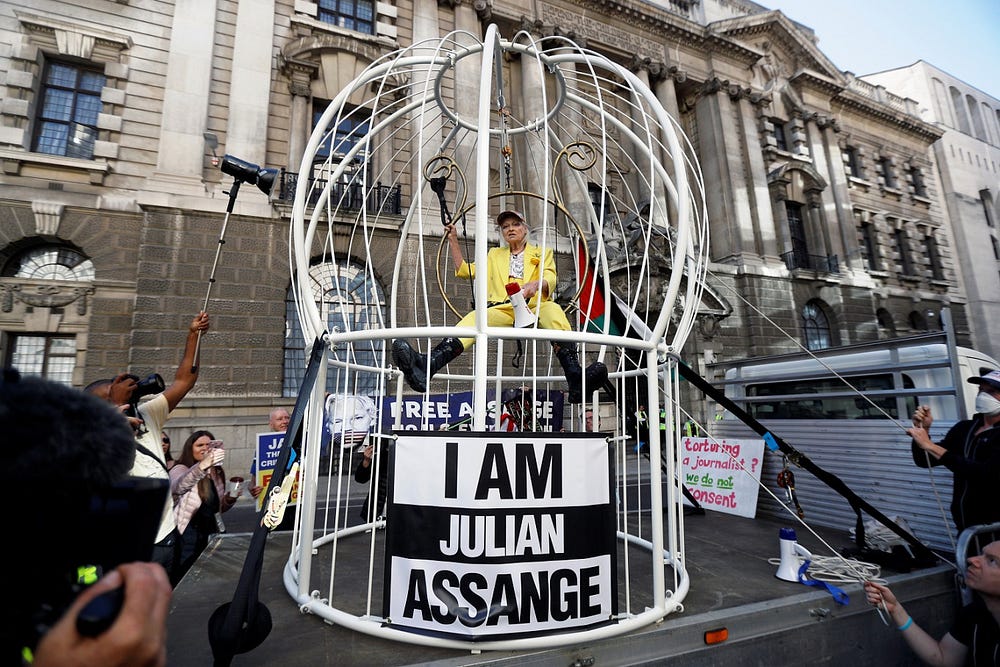
In 2020, Westwood, dressed in a bright yellow suit and black combat boots, climbed inside a giant bird cage and suspended herself 10 feet in the air to protest against Julian Assange’s* extradition to the U.S.
*Julian Assange is the founder of ‘WikiLeaks.’ He was arrested in 2019 for having published disclosed documents that included possible war crimes committed by the US military. Having been in Belmarsh prison, the UK’s highest security prison since, his imprisonment, as the Human Rights organisation Amnesty International writes, is ‘Nothing short of a full-scale assault on the right to freedom of expression.’

To protest for his release in July 2020, Westwood, aged 79 shouted through a microphone:
‘I am the canary in the coal mine. If I die down the coal mine from poisonous gas, that’s the signal for all the miners to leave.’
The canary is well and truly in the coal mine, and surely we must listen to the signs...
Vivienne Westwood died on the 29th of December 2022, aged 81 in her home in Clapham, London. Her funeral was attended by many famous faces whom she had influenced over the years, and with a ‘wear what you want’ policy in true Westwood style, even in her death, she was inspiring ‘radical’ fashion.

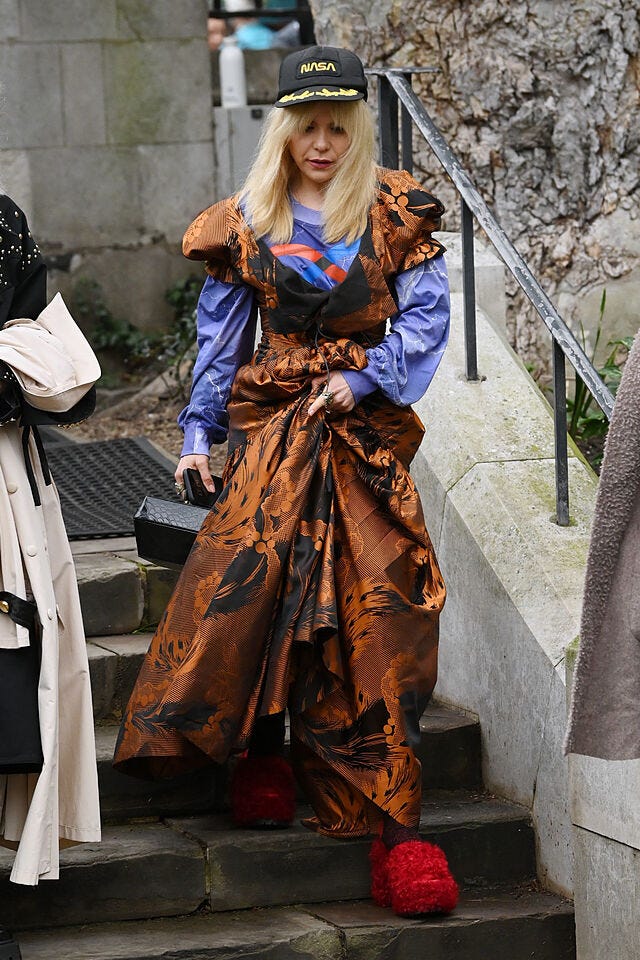
The influence Vivienne had on the punk scene will never be forgotten.
As a statement released at the announcement of Vivienne’s death said:
Vivienne continued to do the things she loved, up until the last moment, designing, working on her art, writing her book, and changing the world for the better. She led an amazing life.
Her innovation and impact over the last 60 years has been immense and will continue into the future. The world needs people like Vivienne to make a change for the better.
In the wake of her death, The Vivienne Foundation, founded by Westwood’s sons and granddaughter, was launched to ‘honour, protect and continue the legacy of Vivienne’s life, design and activism.’
Through the foundation, her family said that they will ‘aim to raise awareness and create change by working with non-governmental organisations on climate change, stopping war, defending human rights, and protesting capitalism.’
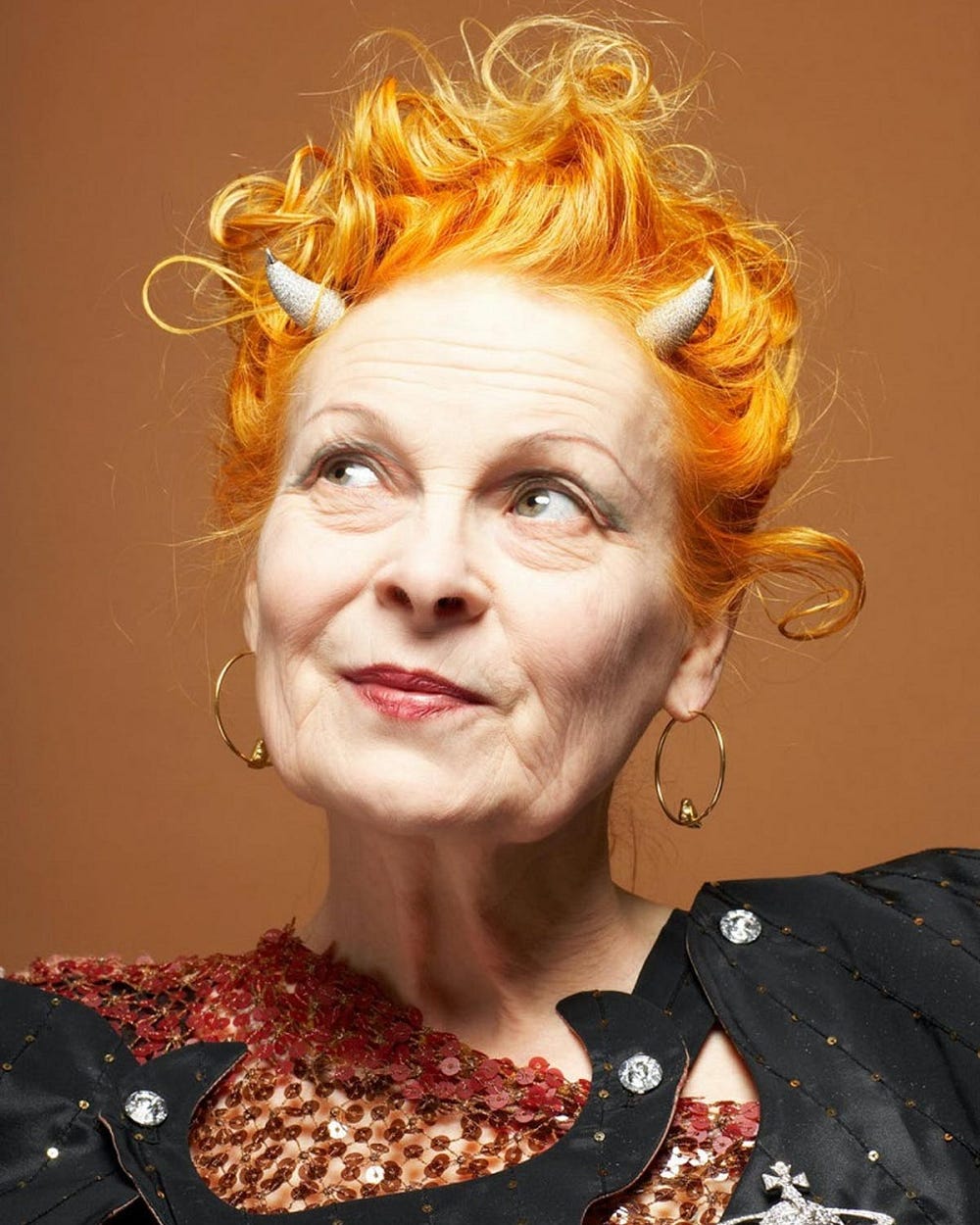
The ‘Godmother of Punk’
Never Mind the Bollocks, Dame Vivienne Westwood, everyone.
(1941–2022).
^ For which there was so much between the dash.
 ANARKISS