

The Swinging Sixties saw the beginning of the Women’s Liberation movement, as prompted by second-wave feminism which focused on issues of equality and discrimination.
While ‘liberal’ feminism is the overarching type of feminism, calling for equality between men and women, not superiority/inferiority, equality (for the right to vote and stand for election, for access to the labour market, for equal rights when it comes to marriage, education, work, human rights), there are also ‘offshoots’ of feminism that arose in the 60s including;
– Socialist feminism
Emphasising the importance of class struggle in addressing social inequalities, focusing upon the interconnectivity of the patriarchy and capitalism.
– Anarcha-feminism
Holding the principle that ‘the personal is political’ and that the struggle against patriarchy is an inherent part of the struggle to abolish the state and abolish capitalism- ‘the state itself is a patriarchal structure.’
– Black feminism
Focusing on the intersectionality of racism and sexism and the additional marginalisation faced by black women.
– Womanism
Speaking to the injustices faced by black people by centering the experiences, contributions, and efforts of Black feminists in order to better the world around them.
– Eco-feminism
Examining the connection between women and nature, suggesting that patriarchy is the driving source behind the degradation of the planet and exploitation of women — ‘Issues that are inextricably linked and cannot be resolved without dismantling oppressive masculine power systems.’
– Radical feminism
Calling for a radical re-ordering of society in which male supremacy/the patriarchy is eliminated (not just ‘adjusted’), in all contexts.
– Lesbian feminism
Encouraging women to focus their attention on their fellow women rather than men, advocating lesbianism as the logical result of feminism- to free women from male domination and heterosexism, ‘an institution that supports male supremacy and female subordination.’
– Separatist feminism
A form of radical feminism that believes that opposition to patriarchy can only be achieved through women’s separation from men (much of the theory is based on lesbian feminism).
– Pro-feminism
Encouraging men to be sympathetic to the feminist movement/aware of women’s experiences by examining their interactions, thought processes, and themselves.
– Revolutionary feminism
Seeing the liberation of women as inseparable from a broader revolutionary movement to dismantle all forms of exploitation and oppression. Working to build a new society where all people — everywhere on the gender, sexual, and body spectrum — can control their bodies, labour, and identities.
^ While there are subtle differences between the different types of feminism, as highlighted above, what ties them all together is their universal focus on achieving equality for women in the workplace and in the family, and on giving all women, everywhere, equal rights over their own bodies.
To focus on the latter, ‘fighting for rights over their own bodies’, the 60s was a time of female sexual empowerment, a symbol of a new, ‘freewheeling’ sexuality.
The development of birth control pills in the 1960s was one of the major causes of the sexual revolution given that women could more easily access contraception.
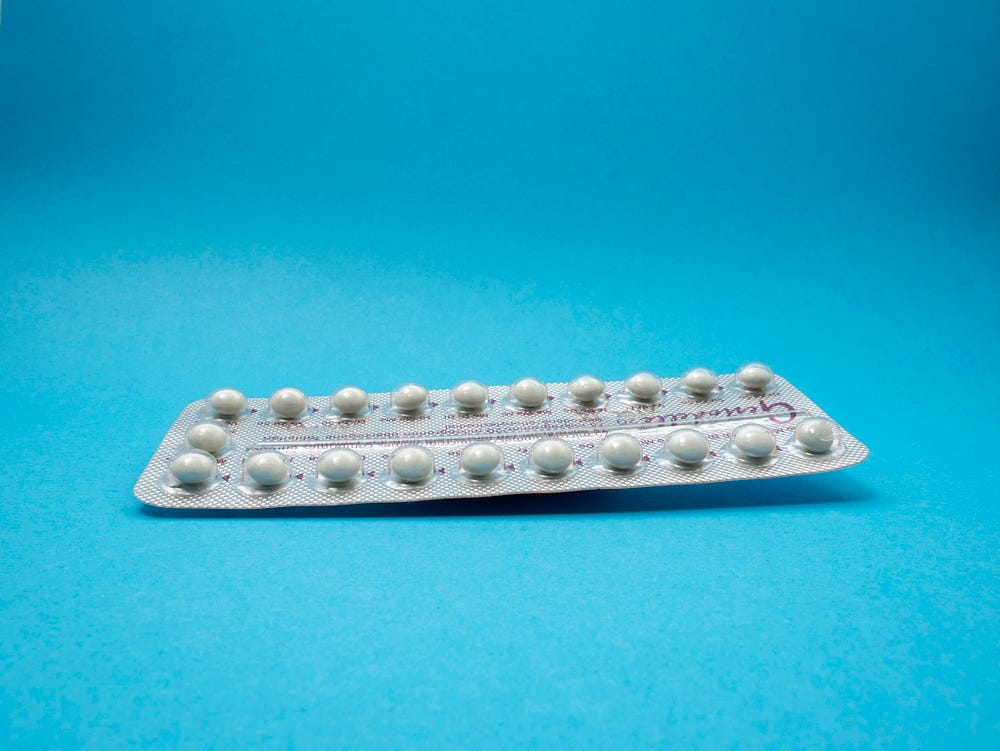
Despite condoms being invented in 1855, women had to wait over a century, until 1961, for their turn to have autonomy over their bodies. And even then, the contraceptive pill was only made available to married women (it was a further 6 years, in 1967, that the pill was made available to all women, irrespective of their relationship status).
When abortion wasn’t legalised until 1967 in the UK, women who fell pregnant as a result of being denied access to contraception would have no choice but to have the baby (or resort to drastic measures for self-induced abortion).
‘Drastic’ because, according to the World Health Organisation, about 22 million self-induced abortions still take place each year worldwide, with an estimated 47,000 women dying annually from associated complications.
Why, when abortion is supposedly ‘accepted’ in society today, are women still dying in their tens of thousands?
Because, while we’re ‘lucky’ in the UK (sad when what should be a basic human right- the right to autonomy over our bodies- is something that we must be ‘lucky’ to have), the fact is that 40% of women still live under restrictive laws surrounding abortion, with 21 countries prohibiting it all together, even if not having an abortion puts the woman’s life at risk…
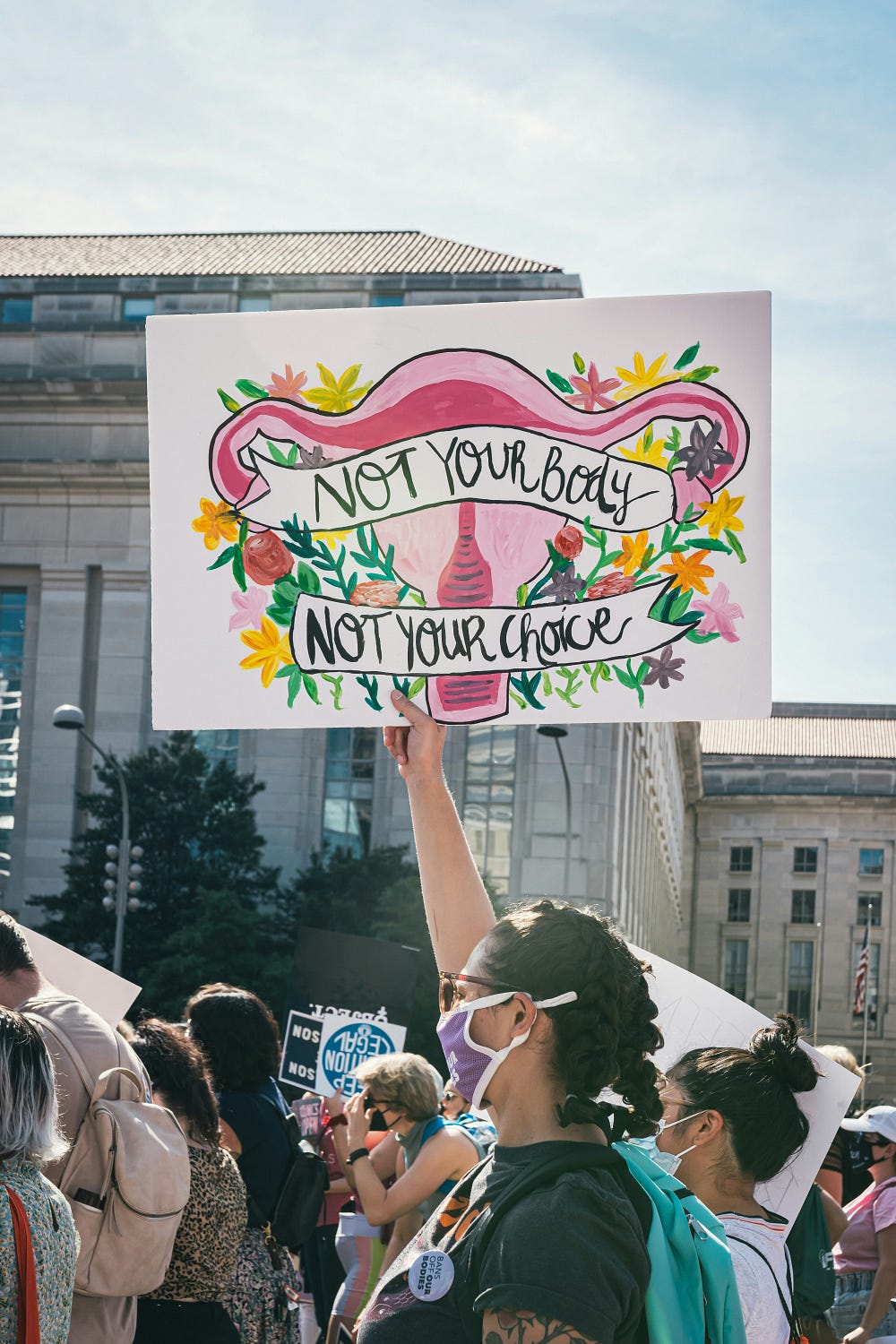
Thankfully, things are moving in the right direction for women now, however, it has irrefutably taken far too long for us to get to this point.
Far, FAR too long when, before 1992, forced sexual activity within marriage (say it for what it is: rape), wasn’t illegal in the UK.
‘Marital rape’ wasn’t considered a crime because it wasn’t considered possible, the assumption being that in getting wed a woman ties the knot (literally), thus wavering her right to say no…
‘What’s yours is mine’, through marriage, a woman’s bodily autonomy is supposedly tied into a knot that can never be broken.
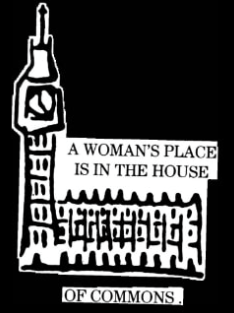
Women should always be the ones to make decisions about their bodies, not politicians (politicians who, by the way, are overwhelmingly male. Even in the UK, a ‘progressive’ country, the highest percentage of women that has ever been in cabinet is 41%)…
When we have few women in parliament to debate issues that directly affect women, those issues get sidelined, hence why, for a timely example, period poverty goes unspoken.
We hear about the effect of the cost of living crisis on our ability to pay for food, gas, electricity, etc, but we rarely hear about its effect on our ability to pay for sanitary products.
A 2023 poll by the charity ActionAid found that the number of people who menstruate in the UK who are struggling to afford period products had risen by almost double compared to the previous year, from 12% to 21%, despite sanitary products being a necessity for half of the population).
Our right to equality as women should not be dependent on where in the world we live.
Our right to equality as women should be a right that we are granted, a human right, always.
We must appreciate that feminism is not a ‘trend’, something that comes and goes as the years pass by, but that feminism is life, our right to life, as women, for which we must devote our whole lives pursuing.
Thanking all the women who came before us, for the progress sought in the ‘swinging sixties’, while staying committed to continuing their legacy, with the acceptance that there is still much to be done…
Seeking equality for ourselves.
Seeking equality for our sisters.
Seeking equality for humankind.
 ANARKISS